The Real Cost of Running Your Med Spa on Five Different Outdated Systems


 RSS Feed
 Most medical spas are held together by a patchwork of disconnected tools—one or more for marketing, another for scheduling and charting, a third for photos, another for payments. Every handoff between them quietly eats staff hours nobody is tracking.
Bill Walker talks with Walker Szurek, co-founder and CEO of Prospyr, about why he built a single connected platform instead of one more point solution. Szurek starts with the EMR and CRM living in one place, then adds point of sale, e-commerce, memberships, and reporting that finally ties a lead all the way through to revenue.
The bigger promise isn't AI for its own sake, it's giving staff their time back. Szurek explains how 60 to 70% of inbound texts are just booking, rescheduling, and canceling, work that can be automated so the front desk spends its hours on new leads and clinicians stop charting at 1 a.m.
Questions answered by this episode
- What is the best all-in-one software for a med spa?
- What software do plastic surgery and wellness practices use to manage patients?
- How can AI save time at a medical practice front desk?
- How do you manage multiple med spa locations in one system?
- What is the difference between an EMR and a CRM for aesthetic practices?
- How much of a front desk's time goes to booking and rescheduling?
- How do you reduce the number of software systems your practice runs on?
- What features should aesthetic practice management software include?
- Does AI transcription actually help with medical charting?
- What is Prospyr and who is it built for?Learn more about Prospyr
GUEST
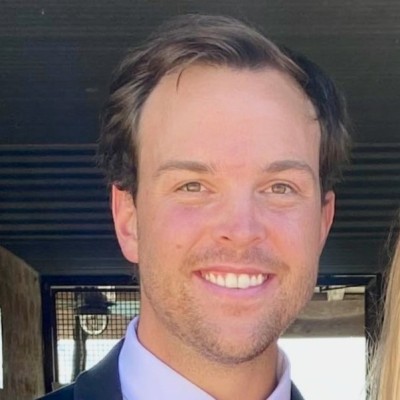
Walker Szurek
Co-Founder & CEO, Prospyr
Walker Szurek is the co-founder and CEO of Prospyr, an all-in-one practice management platform built for medical spas, wellness clinics, and plastic surgery practices. A Stanford-trained mechanical engineer, he started out in private equity due diligence at Bain & Company before moving into software, including a product director role at Chargebee. He founded Prospyr in 2021 with CTO Greg Kopyltsov, shaping the product from a network of practice owners, managers, injectors, and front-desk staff before writing a single line of code. Today Prospyr runs on roughly 500 locations, unifying the EMR, CRM, marketing, point of sale, and AI tools that practices otherwise stitch together across separate systems. Based in Austin, Texas, he stays close to customers and credits listening as the company's real superpower.
Connect with Walker on LinkedIn
Follow Prospyr on Instagram @prospyrmed
About Aesthetic Appeal
Aesthetic Appeal is where Aesthetic Brokers brings you the latest insights straight from Southern California. We break down what's happening in the medical aesthetics world—especially when it comes to private equity and transactions with mergers and acquisitions that matter to you as a practice owner.
Learn more about Aesthetic Brokers
Follow Aesthetic Brokers on Instagram @aestheticbrokers
Theme music: Blinding, Cushy
Walker Szurek (00:00):
With AI, there's a lot of excitement and a lot of buzz that goes with it, but you have to deliver real magic and real special outcomes to the people using it and they've got to trust it.
Bill Walker (00:22):
Welcome back to Aesthetic Appeal, the official podcast for Aesthetic Brokers. We're live here at The Aesthetic Show in Las Vegas at the Beautiful Wynn Hotel Resort. It's a phenomenal place to be. Joining us today is a founder creator of software that is really unique in the aesthetic space and in the wellness space. And they've really captured what clients need and the pain points and we're thrilled to have them here today. So if you would welcome Walker Szurek of Prospyr to the Aesthetic Appeal podcast. Walker, welcome.
Walker Szurek (01:01):
Thank you very much for having me, Bill. I'm really excited to sit down and talk with you today.
Bill Walker (01:04):
What a great name.
Walker Szurek (01:06):
A great name. Great name. Agreed.
Bill Walker (01:08):
And we also maybe figured out there's possibility we may be related.
Walker Szurek (01:13):
Yes. Some distant family connections.
Bill Walker (01:14):
Distant family back to the revolution. So you just never know who you're going to run into in the world, let alone in the aesthetic space.
Walker Szurek (01:22):
Exactly.
Bill Walker (01:23):
So I'd like to start our interview today talking about Prospyr with you as a founder and maybe some backdrop of where you came from before this. So where did you start your career out originally?
Walker Szurek (01:36):
Yeah. So I started my career in consulting with Bain out of DC. And I think what drew me to that is a love of problem solving, right? Being able to work on interesting problems with great people and figure out how to drive value for the people you're working for. I think ultimately I wanted to get into the building side and actually create. And so that led me down the path of going to work in software where I worked for venture capital firms and ultimately in-house with a company doing subscription management and recurring billing. And so learning how to deploy software to solve problems. And that ultimately kind of laid the foundation for me to feel excited and confident to go start Prospyr and solve problems for med spas, wellness clinics and plastic surgeons.
Bill Walker (02:23):
And you're an engineer by trade, correct?
Walker Szurek (02:26):
Yes. I'm a mechanical engineer.
Bill Walker (02:28):
Mechanical engineer. And you're a Cardinal.
Walker Szurek (02:31):
Yes, exactly. A Stanford Cardinal. Haven't used the engineering degree other than building IKEA furniture, but it's just a different type of problem solving.
Bill Walker (02:40):
I love it. Hey, so there's a tool for every problem.
Walker Szurek (02:42):
Yes. Yes.
Bill Walker (02:42):
And Prospyr is the next tool for aesthetics solutions, right?
Walker Szurek (02:46):
Exactly right.
Bill Walker (02:48):
Okay. So a mechanical engineer by training, and then you go into a big three strategic consulting firm. Just real quick, dip a toe in the water. For those who aren't familiar with strategy consulting and the big three, it's a very, very difficult firm to get into. To get into Bain and BCG, McKinsey are very challenging. Kind of just give us a brief overview of what that process is like.
Walker Szurek (03:13):
Yes. So it's basically what you do is you of course apply and they look at your transcripts and everything like that and make sure you kind of clear the first bar. And then it is rounds and rounds of interviews that are called case studies. And so what it is, is basically they present you with a problem. I love the case study process because it's like, I love solving problems. You love solving problems. And so what you do from there is you then have to go and kind of break down the structure of that problem, understand the underlying causes, and then come up with both a plan of how you evaluate it to make sure you're getting to the right answer. Do a lot of math, a lot of live math in the case study, and then ultimately kind of deliver your answer and recommendation in a way that is actionable for the person you're talking to.
(03:59):
And I think while that is just a somewhat unique test in that interview process, I think that principle actually applies a lot to so many things I've done in my life since, especially software development, because the genesis of any good software is a problem. It's a question someone is trying to answer. It is a challenge they're facing. It is a stress they're feeling. And so then with software, you're not just doing it on paper there in an hour and sprinting as fast as you can to do math, you're taking a little bit more time and really listening and asking more questions about the problem, but then you are building the solution to that problem. And so that's what we try to do at Prospyr.
Bill Walker (04:39):
And to be specific, you were in the private equity group, the PEG group of Bain. And so you really understood from a first seat, first chair level, how to run due diligence on what makes a company successful, what makes it not successful, because that was your job, correct?
Walker Szurek (04:56):
Yes. Correct.
Bill Walker (04:57):
And dozens and dozens of companies?
Walker Szurek (04:59):
Yes. Yes. I think I did, oh gosh, about 18 months on what they call the ring fence when you're doing private equity due diligence. And so that would be probably 15 to 18 different companies.
Bill Walker (05:10):
That's a very successful company. Incredibly high barred to get in the door. And then you walked away. And where'd you go and why?
Walker Szurek (05:18):
Yep. So after I left Bain, I said the impetus, it is an incredible place to start your career. You work with amazing people on difficult problems and learn so much starting your career there. But ultimately, I think part of the reason you get into mechanical engineering in the first place, even if you love problem solving, is you love building, right? And you love creating. And so for me, I felt that call to build. And so I went to a group called Products Labs, which was a product consultancy working with inside venture partners.
Bill Walker (05:47):
And this is in New York?
Walker Szurek (05:49):
This was in New York, correct. With their portfolio companies. And that's where I learned how to take this problem solving and how to build software, design software, kind of apply software to that problem solving matrix.
Bill Walker (06:01):
Where'd you grow up originally?
Walker Szurek (06:02):
So I grew up in Asheville, North Carolina and El Paso, Texas. So we moved kind of part way through.
Bill Walker (06:07):
So El Paso, Texas, Asheville, North Carolina. You go all the way to Silicon Valley, to Palo Alto. Then you go to DC. And now you're in New York. You're kind of covering the entire coast to coast.
Walker Szurek (06:20):
I've got coast to coast and then that led me back to the coast. So I went back to San Francisco.
Bill Walker (06:25):
You go back to San Francisco.
Walker Szurek (06:26):
Exactly. As all software people must, it feels like for a period of time. So I went back to San Francisco to work for a company called Chargebee, which does subscription management and recurring billing. Yes. And so there I was a product director, pricing and packaging, worked on their strategy as well.
Bill Walker (06:43):
Was the intention and the thought behind all of this self-curriculum, it feels like, to be a software developer, a producer of a product that helps people with software?
Walker Szurek (06:57):
I love the way you put that of self-curriculum, because I think there was a lot of its intentionality on that journey. I think oftentimes, of course, Prospyr's a product, but I think of myself as a product. And when I'm mentoring people we hire or people I'm talking with, I love to use that kind of terminology of thinking of yourself as a product and what features do I want to add to myself? And so that kind of journey of building my career, a lot of it was about being dangerous enough that if I had the idea, the opportunity that I could be confident stepping into a role of starting a software company.
Bill Walker (07:33):
Dangerous ice man. Dangerous. So I mean, I picked up on that when we had an initial conversation the other day. It was very clear and intentional on your part. And I didn't express that actually at dinner, but it definitely stood out to me. And I thought about that yesterday evening. What did that teach you before you ever built Prospyr? What were a couple of key takeaways that taught you?
Walker Szurek (07:59):
I think a couple of the key takeaways is there is always more to learn.Because I think when you work for a big three strategy consulting firm and you feel like king of the world, right? We're doing everything at the highest level, interfacing with it.
Bill Walker (08:14):
You're the smartest person in the room of all of the things and all of the monies and all of the peoples and all the problems.
Walker Szurek (08:20):
Exactly. So you feel king of the world sometimes, especially when you're young, interfacing with the C-suites of Fortune 500 companies and things like that. And then you step into this new world because you know it's a direction you want to go in. And you have to figure out very quickly, what are the things that I don't know that are going to be critical to be successful in the direction I want to go? And I think of it as oftentimes kind of setting your north star. And for me, it was being dangerous enough that I could start a company if I wanted to and have that skillset where I felt like I knew how to develop software, knew how to fit software to problems that people were excited about having those problems solved. And so then it's just about figuring out what is the path to get there and from where you're standing, what's the most important next step you can take?
(09:07):
And so for me, when I'm at Bain, it is first, I need to learn how to develop software. Mechanical engineering, of course, I did some coding, robotics, things like that there, but you need to learn how software companies develop software. And so that's what incredibly grateful to the people at Products Labs, Shelly Perry, Melissa Perry, Tammy Reese, who taught me so much about -
Bill Walker (09:27):
Studs. Look them up. Studs, iconics, chose wise mentors. That's a wise decision to choose smart mentors.
Walker Szurek (09:34):
Always, always important. And so grateful for them to teach me how do software companies operate, how is software built and really get into the weeds of it. And so that next step of going to Chargebee was about getting into the weeds and building software, working with engineers, developing features. And then using that when you're in the product role at a lot of these tech companies, you're kind of the interface between three groups. The engineers who are actually writing the code and building the product. The customers who have the problems that needs to be solved, that you need to deliver value to in the business so that the products you're building to solve those problems generate value for the business. And so you're living at the interface of those three areas. And it was incredible to spend 18 months there playing that role.
Bill Walker (10:20):
Now, before I get into some more detailed questions about the creation of Prospyr, I've got to ask this because I love talking with founders. When I think about all the founders of these med spas and longevity groups and what it takes to build something from nothing, what's one really dark moment as a founder? It's a lonely journey sometimes. What's one of the loneliest, darkest moments that you can recall when you set out on this track of, I'm going to build an aesthetic and longevity wellness software from scratch?
Walker Szurek (10:57):
I think one of the scariest parts for me on my founder journey is that period before we had our first customer. So what we did, what wasn't in my background as we talked about, was aesthetics and wellness when we were starting Prospyr. So the first thing we did was actually recruit a network of advisors who basically were using all these different systems and played different roles and practices of different types. And they helped us kind of steer and guide the development and design of Prospyr and how they would want to interface it, what they love about some systems, what they don't like about other systems. So we got to learn from that universe. But you reach that point. And especially when you're building software and it's a system of record that is managing clinical records, that is managing financial records. It is a big lift to ask someone to be the first customer.
Bill Walker (11:48):
To be the first.
Walker Szurek (11:49):
The first customer.
Bill Walker (11:50):
Yeah.
Walker Szurek (11:50):
So that period when we're getting close to having the product ready and getting close to being ready to onboard people on it. And that period of stress of who is going to be that first customer, is someone going to want this solution that we've poured our blood, sweat and tears into developing at that point?That was such a heightened time of emotions and just that anxiety of zero to one.
Bill Walker (12:18):
I think one of the things I think about the most about you is that this zero to one, right? The zero to one moment, you have to have moxie. And at the same time, you're a servant. You're a servant to the client that you want to be your first client, the second, the third, and now the hundreds and hundreds of clients that you have. And that is a delicate knife edge to dance on in a pair of tap shoes. I mean, how do you think about that of having humility while carrying Moxie in confidence that we're going to help you?
Walker Szurek (12:56):
Yeah. And I think it's where we often say our superpower is listening. And I think part of -
Bill Walker (13:01):
Before you talk, you bring up a keyword of listening. And I heard this from you last night. What did you do before you even wrote a single line of code?
Walker Szurek (13:11):
Yeah. We built that advisor network and we just had calls and calls and calls. They would basically describe what they would hope a system could do, my software could do. And that was practice owners, practice managers, front desk staff, plastic surgeons, injectors, the universe of people involved. We tried to make sure we were very intentional about finding people whose judgment we trusted and who were giving us a holistic picture, marketers, bookkeepers, things like that of what it takes to run a successful med spa or wellness clinic or plastic surgery office so that we could design that. And so all of Prospyr started from listening.
Bill Walker (13:50):
Was there anything that you guys came across that you decided not to incorporate into the system from conversations and listening?
Walker Szurek (13:57):
I think our focus has always been, can we build something that is uniquely valuable to the customers we serve? And that's where we invest our time. Our engineering team is incredible and they build very fast. So oftentimes we think of it more in now versus later in terms of when we want to address something that could be a problem that our customers want solved. But a lot of times they're using another system for accounting. You don't need probably a unique core ledger for aesthetics and wellness. Eventually it will be incredible to have built into the platform, but the value of us building that versus building the CRM and marketing suite that is going to allow them to, with the nuance of the services they're offering and the products that they sell and things like that, convert a higher percentage of people expressing interest into their practice and to patients.
(14:50):
That was where we wanted to spend our time because it was the bigger, more valuable problem for them. So we think of it more as what are our top priorities to solve right now? And then we keep those lists of other things that people say, oh, it'd be great if it could do this and just try to apply our best judgment and the collective wisdom of our advisors and our many, many customers to get to those priorities.
Bill Walker (15:13):
When I think about the pain point of all of the different systems that we see in a lot of our clients, it's like, wow, you've got a lot of stuff going on here and they don't always talk to each other. And so for an owner that's drowning in tools, how do you guys approach that conversation? What is the value add for that?
Walker Szurek (15:36):
That is, you actually hit on the core problem that Prospyr was built to solve, was to not have to have all of these different systems because we heard that over and over again from those advisors that I mentioned of, I use this for, I use one system for my marketing and emailing and lead nurturing. I use a different system for my scheduling and my medical records, sometimes other systems for photos and things like that. And oftentimes each of these is a great system independent in and of itself, but it's very hard and a big burden on the staff to work across so many systems. And so that's actually the core problem that Prospyr started with. And where we started was putting the EMR, the medical record system in conjunction with the CRM, the lead management nurturing retention system that powers SMS, email, all of those tools to get people converted.
(16:29):
That's where we started. And we built so much more since over the past five years, but that was the core problem we wanted to solve. And so then we took that kind of guiding principle to the next stage with full point of sale built for aesthetics and wellness with services, products, packages, memberships, rewards, gift cards, both sold in clinic and sold online for those things that are eligible to be sold online so that you then don't need an e-commerce platform because that actually comes with Prospyr as well. And now we're at this exciting point in this vision of having everything end to end where we can do two things. One is draw all of those through lines through reporting because you're not just reporting on your leads. You're not just reporting on your financials. You're able to tie those things together so you can do things like say, "Hey, where are my leads coming in from?
(17:20):
Which ones are driving the most leads, but how valuable are each of those leads that are coming in?" One of the biggest line items for our customers on what they spend is marketing. They're spending a lot on marketing to get people in the door attracted to the business. And so one, you need tools to be able to convert those people. But two, you need to know that you're spending that money wisely and that those channels that you're spending money through are driving the value you want for your business. So by having all of those pieces together, we can show, hey, what are our most valuable lead sources for our practices?
Bill Walker (17:52):
One of the things that you brought up that makes me think about value add is I think of back to my buy side days in M&A of the value of having all of your practices on the same system. And so the compounding, it's not an addition. And so it's a multiplicative of not only do I have all of my practices on the same system, I have one system for all of my sub-vertical needs because I feel like there's that synergistic value. Would you kind of talk through what that provides when you think about running multiple med spa and wellness practices under one umbrella?
Walker Szurek (18:33):
Yeah. So Prospyr was built to support multiple locations from day one. And what that allows you to do by having it all in one place, one, it makes some of the day to day or larger activities just immediately easy. And it doesn't constrain your growth. It allows you to do things like cross schedule providers. If you have locations in the same area and they're working in, can be used across different locations. So you're maximizing the value of that person's time and giving them the benefit of that as well. And then also you want to do something like start up a new location. Everything already lives in the same system. Your marketing suite is already set up. All of your forms, consents, charting templates, everything, all of your standard operating procedures are already in there. So you want to go expand this group that you've built.
(19:22):
You're just adding a location and adding who is working there and everything else is all set up.
Bill Walker (19:27):
Okay. So I'm a patient in this testimonial right now. I wish that my dental office was on Prospyr because yesterday I was supposed to get my hygiene checkup and they told me that I had the four o'clock slot. And I'm like, great. End of the day, this is perfect. I got a call and it was, "Hey Bill, we're sorry. We messed up. She's at the other location."
Walker Szurek (19:53):
Oh no.
Bill Walker (19:54):
So if only for Prospyr. If only for Prospyr. A little cheeky and with respect, why have I not heard of Prospyr to this point?
Walker Szurek (20:07):
I think our focus is on the product and building and supporting our customers. I think one thing that we really feel is that we are helping our customers with so much in so many critical parts of the business, the sales and marketing operations, the clinical operations, the financial operations of their lifeblood, their heart and soul that they're pouring into their business. And we have that founder to founder empathy with our customers all the time. So we've been incredibly focused on our existing customers. And I think that has paid dividends for us because all of our new customers that have come over the past two years have all been customer to customer referrals and things like that, or people who've heard about us from our existing customers. So we've really just been heads down continuing to build the best product that can exist for aesthetics and wellness.
(20:57):
And we're at some really exciting points with what this product is able to do with a lot of our new AI features and functionality embedded all the way through that has that kind of end to end foundation now with that sprinkling of magic of saving people time, driving real ROI, having round the clock coverage. And so we're kind of reaching that point where the product speaks for itself with our customers.
Bill Walker (21:22):
So should we be looking forward to you guys having a big booth at the next conference?
Walker Szurek (21:27):
I don't know if we will have a big booth at the next conference because we are still in that focus period and that's where our focus lies. You'll definitely hear more about us and hear from us more, but I don't know if we're going to dedicate the time to conferences just yet.
Bill Walker (21:44):
Approximately how many clients are now being serviced by Prospyr?
Walker Szurek (21:49):
Yeah. We've got about 500 locations, you need clinics on Prospyr.
Bill Walker (21:54):
Wow. And that's impressive. It's clear from our previous conversations that you guys are laser focused on keeping the main thing, which is the client. And I think that's great. If you were going to have to be put on the spot and say, what's the superpower for Prospyr? What is it?
Walker Szurek (22:15):
Yeah. So I think it all comes from my saying earlier that our superpower is listening, but how that has kind of manifested in the product itself, the superpower of Prospyr as a product is the breadth and then the connections across that breadth. So what that means is that when you are signing on and joining and setting up Prospyr, it means everything is happening in one system end to end across all of your needs as a business. And then it means that where you are deploying AI to answer calls after hours or transcribe your chart notes and things like that, all of those tools have the context to be so much smarter because it has more information about the patient. It has what they expressed interest in on previous intake forms or in previous conversations. It knows that history so it can be more tailored to that patient experience.
(23:08):
So we get to drive that. I think with AI, there's a lot of excitement and a lot of buzz that goes with it, but you have to deliver real magic and real special outcomes to the people using it. And they've got to trust it. And so I think the way we have built our platform end to end in this incredible foundation, and then the way we can deploy these tools on top of it, give us the ability to really drive those moments of magic for folks.
Bill Walker (23:37):
For somebody who's thinking about this and saying like, what is my benefit as an owner of three, four, five locations? They're successful. They might have one of the locations that's a little struggling or is maybe a newer baby on the de novo side for that founder. They don't have the resources and the luxury of spending money on five, six, seven people at a corporate level to help. What does a before and after look like for somebody like that who's like, okay, we've got some success. We're making some good money, but we're not where we really want to be and we know that we can grow into something. If they become a Prospyr client, what does that before and after feel like?
Walker Szurek (24:21):
The value is the agency of every single person on that staff. And the way I think about it is we joke that I've now worked months in med spas at the front desk just learning from advisors and customers.
Bill Walker (24:36):
What's my Fitzpatrick scale? Talk to me about my Fitzpatrick scale Walker.
Walker Szurek (24:39):
So we joke that, so we often think of it from a time perspective. So to give an example of that before and after, right? Of say you are a busy or successful clinic or you're a clinic that's struggling, that phone is still ringing. Those texts are still coming in. And we did an analysis that 60, 70% of those text messages that are coming in are about booking, rescheduling, canceling, things that take time, but don't require as much of that personal touch in a lot of ways, especially with the right rule set and guarding around what can be booked by which customer, which we just build into the logic of the system. And so that person's time that was spent over here, maybe in a different system of, let me text this patient, let me look in this system to see if I can book this thing and back and forth there, that entire workflow is now automated so that they don't need to do that or reschedule an appointment or anything like that.
(25:35):
So where does that person's time spent now? It's on those personal touches, kind of talking to those new patients, those new leads, those people who haven't converted yet and kind of delivering that kind of personal element that we think is so critical and that we want to enable our customers to deliver. So we think of it through those lenses of time. What does your time look like before we started using Prospyr and what does it look like after? So I gave that front desk example. For a clinician, oftentimes it means you're not charting until 1:00 AM to try to make sure you're staying compliant with your charts.
(26:08):
Because it's more streamlined, it's automated, it's auto filling and it's being AI transcribed to expedite that process. And as a practice manager, you're trying to understand what's working and what's not. All of those reports are in the same system. All of it is talking together. I'm not pulling something from one system, matching it to things in another. So we think of it as reduce the amount of time you actually have to use the software so that your time can be spent with patients or hiring or doing those additional things that are going to grow that business.
Bill Walker (26:37):
There's a popular spoof PE private equity guy on social media. It's like double bummer. Double goodie. It's like I had a double bummer, but now I'm a double goodie. What's next? What are you keeping your eye on?
Walker Szurek (26:53):
I'll be a broken record here. We're constantly listening to customers for new ways that we can continue to evolve the product. And again, kind of cut down on any of that time that's being used in the system. So AI transcription is a great example. You save a ton of time by transcribing that chart for the clinician to review so that it is compliant and done right then and there while the appointment is happening, not long after. But because the product is so broad, we can do so much more with those types of AI tools. So we can do things like queue up a follow up check-in text to go out if you talk about that. Queue up the next appointment for scheduling. So they're already coming back in the door, assigned tasks, queue up prescriptions for the provider to approve and send. So we're continuing to look at ways to kind of use these.
(27:41):
We think of them as like part of your staff. Our AI medical assistant, for example, is the one I was just talking through. How can we continue to take on more of that role and time so that you don't have to do any of those things? And so we're in that kind of process with our customers who are using these tools we've built and it's already saving them time and figuring out how we can save them even more.
Bill Walker (28:03):
Who's your co-founder, your chief technology officer?
Walker Szurek (28:06):
Greg. Greg Kopyltsov is our chief technology officer.
Bill Walker (28:09):
The Gregster.
Walker Szurek (28:10):
Exactly. He is a magician. He is truly, I could not be more fortunate to have started Prospyr with Greg because he is so humble, so insightful and just truly in the software community, they talk about them as 10X or 100X engineers. He is beyond that in every way, shape and form and lives on the cutting edge of what is happening in AI, what is happening in software development so that he can bring that into Prospyr. I love the way that he talks about software because what motivates him and excites him is that he can write things on his computer that are impacting the real world. And so he can write things on his computer that are going to change the way this person spends their time, spends their day and kind of actually impact things that are happening for our customers by bringing those most modern tools to bear. And so it's something that constantly inspires me working with Greg.
Bill Walker (29:07):
It's like being in the Hall of Justice and you got Batman and Robin. It's like, look at him. Look at what. That's my developer. That's the Gregster. He speaks in code. He doesn't even speak. He just speaks in code. He's amazing. Thanks so much. I know you're a very busy man. The amount of intentional focus that you guys put on your clients is remarkable. I've seen it just in the short amount of time that we spent constantly making sure you're at the ready. And I think that's so key and so valuable in this space. It's not a given, unfortunately, for a lot of people. Ladies and gentlemen, Greg and Walker have built something really cool and special. And it was an honor to have you guys on the podcast.
Walker Szurek (29:55):
Well, thank you so much for having me, Bill. I've really enjoyed our conversation and getting to know you.
Bill Walker (29:59):
Walker Szurek, the S is silent, Zurich like Switzerland. Look him up, Prospyr with a Y. They are out of Austin, Texas and they're going to be making waves in the aesthetic and wellness space for years to come because of their constant insatiable need to listen to their clients. If you like that episode of the podcast for Aesthetic Appeal, please join us and like us and follow Prospyr and their journey throughout the aesthetic space. I'm Bill Walker signing off for Aesthetic Brokers today. Thanks.
Co-Founder & CEO, Prospyr
Walker Szurek is the co-founder and CEO of Prospyr, an all-in-one practice management platform built for medical spas, wellness clinics, and plastic surgery practices. A Stanford-trained mechanical engineer, he started out in private equity due diligence at Bain & Company before moving into software, including a product director role at Chargebee. He founded Prospyr in 2021 with CTO Greg Kopyltsov, shaping the product from a network of practice owners, managers, injectors, and front-desk staff before writing a single line of code. Today Prospyr runs on roughly 500 locations, unifying the EMR, CRM, marketing, point of sale, and AI tools that practices otherwise stitch together across separate systems. Based in Austin, Texas, he stays close to customers and credits listening as the company's real superpower.