The Real Reason Accreditation Could Make or Break Your Sale


 RSS Feed
 For any practice owner eyeing a sale, or an investor sizing one up, the real risk in a med spa or surgery center rarely shows up on a P&L. It's in what happens after the doors close: whether DVT protocols get followed, whether a medical director has ever set foot in the building, whether anyone can prove any of it.
Tom Terranova, CEO of QUAD A, walks through how the organization's new med spa accreditation program grades procedures by risk level, why documentation is the single most common gap facilities uncover, and the research tying accreditation compliance directly to drops in mortality from blood clots.
He also makes the case for why variability, not incompetence, is the real threat to a practice's value. An unaccredited multi-location group can multiply an investor's risk far beyond what the math suggests, while standardized, predictable operations are exactly what private equity is looking to buy.
Listen for the story of the clinic that scored a perfect survey in 90 minutes, and why "radical accountability" changes how a team handles mistakes.
Questions answered by this episode:
- What is medical spa accreditation?
- How does risk affect a medical practice's valuation?
- Does accreditation help when selling a medical practice?
- What is QUAD A accreditation?
- How long does it take to get accredited?
- What is the leading cause of death after cosmetic surgery?
- Why do private equity firms prefer standardized practices?
- What is the most common accreditation deficiency?
- Is medical spa accreditation required by law?
- What is risk stratification in medical spas?
Learn more about QUAD A
GUEST
Tom Terranova
CEO, QUAD A
Tom Terranova is CEO of QUAD A, a nonprofit accreditation organization founded in 1980 that reviews ambulatory surgery centers, med spas, and other outpatient facilities for quality and safety. He joined QUAD A in 2009 and has led the organization since 2019, after practicing M&A law at Greenberg Traurig and building predictive-analytics models for corporate risk earlier in his career. Terranova holds a JD, MBA, and MA, and has spent his career translating patient-safety data into standards that regulators, investors, and practitioners can act on. He is a frequent speaker on accreditation, risk, and the business side of aesthetic medicine.
Connect with Tom on LinkedIn
Follow QUAD A on Instagram @quadanow
About Aesthetic Appeal
Aesthetic Appeal is where Aesthetic Brokers brings you the latest insights straight from Southern California. We break down what's happening in the medical aesthetics world—especially when it comes to private equity and transactions with mergers and acquisitions that matter to you as a practice owner.
Learn more about Aesthetic Brokers
Follow Aesthetic Brokers on Instagram @aestheticbrokers
Theme music: Blinding, Cushy
Tom Terranova (00:00):
And the expert on the stage said, why are you trying to get me to say that you can do something that you're not legally allowed to do? You're never going to get me to buy in. If you want to be the guy hiding something in the closet, why are you out here looking for legitimacy? The legitimacy is going to come when you do the things that are proved. So I think that's a weird dynamic that's happening here because it's so cutting edge.
Bill Walker (00:27):
Hey, welcome back to the Aesthetic Appeal Podcast, the official podcast for Aesthetic Brokers. We're here live all day today at the aesthetic show at the Gorgeous Wynn Resort. And with me in this episode, Tom Terranova of Quad A. Tom, welcome to the show.
Tom Terranova (00:45):
Thank you. Thanks for having me here in this, as you said, beautiful venue.
Bill Walker (00:49):
It's pretty impressive, right?
Tom Terranova (00:50):
Yeah.
Bill Walker (00:52):
So Tom, Quad A.
Tom Terranova (00:55):
Yes.
Bill Walker (00:55):
What is Quad A?
Tom Terranova (00:57):
So Quad A is a 47-year-old nonprofit organization, nonprofit business tax exempt business, however you want to term it, that is dedicated to patient safety. And so a lot of people are dedicated to patient safety, but the way that we operationalize that mission is to conduct onsite assessments of medical facilities for quality and safety. So the whole purpose of the organization is to be a self-improvement mechanism for the medical industry and to be a beacon and a standard bearer for quality and safety and confidence building and trust building for patients and for the public and regulators. So that's the very, very generic version. I can go into it deeper if you want, but that's sort of the flyby version.
Bill Walker (01:41):
Now I can tell by your thick Texas accent that... Where are you from, Tom? And give us a little background on you.
Tom Terranova (01:48):
Yeah. So I'm born and raised in Chicago. The interesting that you said a thick Texas accent, I think I spent every summer of my life from age about eight to 16 in Texas. I don't think I got the accent, but I did get some weird terminology. So if you hear a guy with a Chicago accent saying y'all a lot, it's probably me. So I opted for y'all instead of you's guys, which is the Chicago version of y'all.
Bill Walker (02:14):
Chicago you's guys.
Tom Terranova (02:14):
So yeah, that's me. Background wise, I've been with Quad A since 2009 in various capacities.
Bill Walker (02:23):
Well, wait, I want you, don't skip over this part. Tell us about your academic background and why that all came about. And I think it's very important of how that led into you leading the organization.
Tom Terranova (02:36):
Sure, sure. Yeah. You're pulling the curtain back on our conversations, which I love. So I mean, let's go back in the way back machine. So I actually started school at Tulane University in New Orleans. Hated it there. I loved the school, loved New Orleans, didn't like the -
Bill Walker (02:52):
I'm sure you loved Fat Tuesday.
Tom Terranova (02:54):
Exactly. Yeah. I was not a cultural fit at the school. I'll just put it that way. So I went to Loyal University of Chicago. I was actually a dual major in political science and international relations. Went to grad school at the University of Chicago in an interdisciplinary committee called Committee on Foreign Relations. Did about a third of my coursework in law, about a third of my coursework in public policy, and about a third in the school of social sciences and business kind of split.
Bill Walker (03:22):
And how does that at all tie into the plastic surgery and medical aesthetic universe?
Tom Terranova (03:30):
It doesn't until you start working and then you get into really interesting stuff. So about 2007, I went to work for a person who at the time was the head of Northwesterns. I'm going to get this wrong, but I think it's like the Ford Center for Organizational Psychology, philosophy, something like that. But essentially it's about... It was in the business school at Northwestern at Kellogg and it's essentially about how organizations behave. And it was fascinating consultancy that he had. I mean, we're surrounded by AI organizations and people selling bots and things like that. And the reality is back in 2006, we were working in the infancy of that and these brilliant mathematicians at HEC in Montreal had developed algorithms that scraped our clients, scraped the internet, like six billion pieces of news a day.
Bill Walker (04:22):
Six billion.
Tom Terranova (04:23):
I think it was with a B. I'm going back 25 years here now. So correct me, don't hold me on it, but it was a tremendous amount. It's four to six billion pieces of news items a day. When I say news items, it might be consumer blogs or message boards back in the day. And so they were doing that in 35 languages and then providing the data to us as human intelligence. And then we had to anticipate what was happening for our clients. And this was stuff that wouldn't typically show up on the stock market. So it would be things like, "Hey, there's a protest movement going on in an area that's critical to your supply chain about deforestation or whatever it may be, and it's going to affect your supply chain and you're going to have delays or you're going to have adulterated product or whatever." And so we did what was called predictive analytics now and what's pretty cool and easily automated back then.
(05:12):
And so it was really fascinating. And long story long, we wound up doing a project for a multinational insurer that was starting to explore covering patients going abroad for care. Here we go. You could go into India, for example, and get a really complex heart procedure for a fifth of the cost of the US. And so insurers at the time would say, "Okay, well, we're going to pay first class airfare for you and a companion. We're going to pay for your five star luxury hotel. We're going to pay for your heart surgery or joint replacement or whatever it may be and then for convalescent time and actually give you some pocket money to spend because it's still going to wind up being 30 or 40% of what we pay for a quadruple bypass in the US."
Bill Walker (05:56):
And you're looking at efficacy and like what's the risk profile?
Tom Terranova (05:58):
Correct.
Bill Walker (05:59):
And now we're into risk.
Tom Terranova (06:00):
Yeah. And so we did a huge project for some of those folks and then the Great Recession hit. And while this was all incredibly fascinating and really interesting stuff that we were doing, it's a little harder for a board of a major Fortune 500 company when the stocks are going down, discretionary spending is getting cut to spend on something so esoteric as this. And so the place shuttered and I was six months from my wedding without a job and looking for a job and at the time Quad A, which was then known by its more formal name, the American Association for Accreditation of Ambulatory Surgery Facilities and you could see why we didn't answer the phone that way. They were looking for somebody to work in legislative affairs, which was essentially my background at this point and had a point in their job posting about medical travel, about our international program, which had started in 2005.
(06:52):
And so the point there was patients going abroad for what they called medical tourism. I hate that term. I call it health travel, medical travel, because it's not tourism. If anybody out there is thinking about healthcare tourism, you're not getting a quadruple bypass and then hanging out on the beach in Bali. You're not getting a breast augmentation and then going to sun yourself in Rio. You're going to be bruised and messed up. So it's not medical tourism. In fact, if you go to some of these really wonderful hospitals, the hospitals are great, but the infrastructure around them might prevent you doing anything really. One of the stories I heard was about knee replacement in India and they said the hospital's great, airport's great, but when you're going from the hospital to the airport and you spend six hours with your new knee bent in the back of a took on bumpy roads, it's probably not the best for the knee replacement.
(07:35):
So again, separate from that tangent, that's really what drew me to Quad A. I came into the organization in 09 really as the person who was going to be the point of contact for all legislative affairs regarding safety legislation, safety regulation in any of the states by the federal government. And then as diverse foreign governments wanted to kind of regulate the space around whether it was medical travel, plastics and aesthetic surgery in some cases like kind of cosmetic dentistry, but kind of anything where the patient was going to be involved, where the government wanted to speak or have a position on it, that would be my role. We don't lobby. We're not allowed to lobby. We don't advocate at all. So we just do technical advisory role. So anytime that came up, we would say, "Okay, here's how it's going to affect access. Here's how you can effectively get oversight.
(08:23):
Here's how we can get healthcare at the table as opposed to some regulator." Most people don't... I think if they stop to think about it, they'd realize most regulation and legislation is either written by sort of an advocacy group or maybe some congressional aid who's probably like in their 20s -
Bill Walker (08:41):
One of nine things that they're focused on as an expert.
Tom Terranova (08:44):
Exactly. So for us, one of the big things is to have medicine at the table, have them writing the standards, have it be clinically relevant, have it be clinically important and then kind of turn it over as an easy offer ramp to the government to say, "What you guys are focused on, safety is great, but the mechanisms you're pulling may not be the most effective way to get there. Here's a program that allows you to do that. If you want, we can partner with you to provide oversight."
Bill Walker (09:07):
I love risk assessment and safety as it ties into the aesthetic and wellness space because -
Tom Terranova (09:13):
You're one of three people who love risk assessment and safety. Go ahead. Maybe four people.
Bill Walker (09:20):
I think it goes back to conversations that you and I have had in the past. And having grown up in my early professional career as a Marine Corps aviator, aviation is all about Lean Six Sigma and how do we minimize risk, right? If we can make it replicable time after time after time and get the sets and reps that need to be involved to build a curriculum that is repeatable at a very commonplace level in aesthetics it ends up being lower mortality, higher efficacy, better patient outcomes. I think that is what is going to drive the industry even more wildly successful than it already has over the last 30 years.
Tom Terranova (10:06):
Right. Yeah, you're 100% right and that has... I mean, Quad A's origin stories in plastic surgery for that very reason was sort of what was going to drive safety that allowed the industry to progress. We started in 1980 in that space in the surgical aesthetic space because of the variability and the lack of repeatability and the lack of sort of predictability, right?
Bill Walker (10:35):
Give me one example. So he is a lawyer by trade. So everything that we're saying is in the presence of my attorney. I just want that to be clear.
Tom Terranova (10:43):
Yeah. I should probably give the general disclaimer too. Nothing I'm giving is legal advice. Don't take this as legal advice, consult your own attorney. I also went to business school. I'm not going to give you business advice either.
Bill Walker (10:54):
But give me one example. I want to use this to partly into another question. Give me one example in the plastic surgery space where I mean surgeons are highly competitive, highly competent, extremely confident, especially plastic surgeons are extremely confident individuals. Do not walk into their space and tell them that they're messed up. You better prove it. Show me one example that Quad A helped in that space
Tom Terranova (11:21):
There's a few, there's numerous examples. The best one is we've kind of been in this longitudinal series of reports and papers written by academics going back to, I want to say the first one was like 2004. And so the physician who created our data reporting system was really a visionary. It was way ahead of his time in terms of data driven outcomes and data driven medicine and instituted our mandatory peer review, what used to call peer review and now we call it patient safety data reporting in 2001. So what that is, is every single operating physician, every single practitioner in a quality accredited facility submits data, aggregate de - identified data every three months. It used to be six months now to three months. And then we pull from that rates of adverse events. So first study was essentially establishing that the rate of complications, including death was as low or lower in accredited facilities as they are in hospitals and published kind of federal data and licensed ASCs.
(12:21):
Second one was two, three years later was when there are deaths, the leading cause of death is DVT or VTE venous thromboembolism, pulmonary embolus, kind of the same thing.
Bill Walker (12:33):
Say that one more time. It sounded really fast.
Tom Terranova (12:34):
Deep vein thrombosis, DVT or VTE, which is venous thromboembolism or PE, which is pulmonary embolism.
Bill Walker (12:40):
Thank you.
Tom Terranova (12:41):
Kind of the same family of complications and those would be the leading cause of death even when death still did happen in an accredited center. So then fast forward a few more years and we put in place screening protocols as part of our standard. So when you're going to treat a patient, we want you as a physician, we want you as a center to go through a screening protocol with the patient and make a logical informed decision as to how you're going to protect against VTE, DVT, that same family with based on your medical judgment. We're not telling you what you have to do. We're just saying, there's a few things we tell you you have to do. You have to have sequential compression devices to keep the blood flowing or compression socks depending on the types of procedures. But other than that, as a physician, you may choose to medicate with blood thinners and things like that.
(13:27):
There's other ways that you might protect a patient against these complications. And so we put in this standard saying, "You have to go through this process and make an informed decision." And so that was sort of a watershed moment because we said, "This data is showing us this a risk. Let's do something about the risk." And then a few years later we measured the risk and it started with a retrospective study that said, "All right, let's find complications where they occurred." And then the researchers went back and looked into the medical record and found, okay, when these deaths happen, the screening wasn't proper. It was done improperly or wasn't done at all. So then fast forward a few more years and we have a data use agreement with researchers at Harvard and there's been a couple other intermittent studies that we've done in between, but we kind of hit what I thought was just the most fascinating study and what they did was they finally tied compliance data, our compliance data with our standards to those adverse events.
(14:19):
And it was a four year period, a three and a half, four year period that they looked at all the studies across over a thousand plastic surgery facilities, 3000 facilities that we accredit. And what they found was on any given year when our citations, meaning the facilities weren't doing it, our citations for this screening practices went up mortality and adverse events went up and on years when we found the facilities overwhelmingly compliant and those citations went down, there was a dramatic drop in adverse events and mortality from DVT. And so we talked about causality and correlation.
Bill Walker (15:00):
Yes, causality versus correlation.
Tom Terranova (15:01):
Yeah. We can't establish causality because that data is de - identified so we don't know that this facility was cited and then that facility also had a DVT. So all we can do is tie occurrence, but we can see an incredibly strong correlation between citations spiking and adverse events spiking, citations plummeting, adverse events plummeting from 2019 to mid 2022. I'll share this with you just because it's funny, as someone who loves risk assessment as you said, the researcher for Harvard, I've never seen anybody so giddy over data before. He was sort of like -
Bill Walker (15:37):
I'm picturing, I'm going back to Cambridge right now. I'm like, I got it.
Tom Terranova (15:40):
Nerdily laughing about the confidence level and how high the interval was for the standard deviations of this to say that there's such a strong correlation between these ideas that, I've never seen such overwhelmingly clean data and such an overwhelmingly tight correlation when we can't do causality. So from a data nerd perspective, it was pretty strong.
Bill Walker (16:02):
Yeah, that's fantastic. I think the key there is it's so empowering. I think it's an empowering moment because whether you're a plastic surgeon or a med spa owner or a longevity clinic owner, it's the idea that like I can take this data that's been anonymized. I can take it at face value and not have a blame assigned and just say, "I want to make myself better. I want to make my clinic better. I want to make my providers better and take that same mentality in everyday facets of leadership." And it's just that extreme commitment to leadership.
Tom Terranova (16:40):
Yeah. Yeah. Extreme commitment to leadership, what is it? Extreme accountability, right?
Bill Walker (16:44):
Extreme accountability.
Tom Terranova (16:45):
Extreme accountability. I think we were just talking about a speaker that I heard that also comes from military aviation. I think his terminology was radical accountability.
Bill Walker (16:55):
Radical accountability.
Tom Terranova (16:56):
Radical accountability.
Bill Walker (16:57):
I'll buy in on that.
Tom Terranova (16:57):
So I am 100% at fault. I take 100% accountability for everything that goes wrong on my team, right? And that's the idea. So you don't get to say, "I'm accountable for this. I take ownership of it, but you really drop the ball." We each say we're 100% to blame, right?
Bill Walker (17:14):
I think the glove to that hand is there's got to be grace. If you can extend grace to someone for taking supreme accountability, then it allows everybody to level set and believe that there's a trust that gets built quickly again to be able to pursue like - minded goals without intrepidation or caution.
Tom Terranova (17:37):
Yeah. And I think the point is accountability is a bad word. It's a four letter word now because it means you're going to get fired, right? But the reality is accountability is, okay, what were our objectives today? Here's how the behavior went. What would you do differently? What should you do differently? Do you have any doubt in your mind that you could do it the right way tomorrow? And by the way, I don't have any doubt you could do it the right way tomorrow. And we talked about debriefing earlier and essentially that's what it is.
Bill Walker (18:02):
A ready room debrief is horrible. And it's like stand up, drop down to your most exposed self and just get brutally, honestly told every flaw.
Tom Terranova (18:12):
Extreme vulnerability, but also in that vulnerability to say, "Here's where I could have done something different. Here's why I should have done something different. Here's where I will do something different. And when we go do it tomorrow, it will be done this way." And that grace that you say to say, "I believe you, I believe in you and tomorrow I want to be next to you when you do it the right way, just the way I was today when I was next to you and you didn't do it the right way." And I think that's the key and as you said, we're sort of a watershed moment for like the med spa space. It's the same in surgery to say we as a unit want that consistency. And when you talked about plastic surgeons, how do you sell that to them as an idea? And I think it's the same with med spinals.
(18:53):
I don't think anybody who's entrepreneurial and type A is any different. The point is what you expect as an owner, as an operator, as a director is not what you're going to get. As you said, you're going to inspect what you expect and it's not me, right? It's you as an owner because if I'm the surgeon, probably the person I'm paying the least attention to in my center is the person who's working the sterile supply cost. Guess what? That person's probably as responsible or more than I am as the surgeon for whether or not I'm going to get an infection or whether I'm going to get a necrotizing fasciitis, right?That person is sterilizing my equipment, is storing my equipment, is potentially overloading drawers and the sterile packs are getting torn apart and ripped or steam is leaking up into the sterile packs and violating them and contaminating them.
(19:39):
That person is operating the way they see fit if you don't have a framework, if you don't have a structure.
Bill Walker (19:45):
When I talk about aviation safety in my previous life, I would sometimes refer to five love languages because you've got to think in an average squadron, there's no less than five languages you're going to speak at different levels of management and leadership and also at different areas of expertise that you have to speak their love language and translate your vision as that med spa owner or as that plastic surgeon in owning the overall success and failure of the organization, it comes down to like, how can I communicate our goals and our vision and our values in a language that everybody from the medical assistant to the nurse practitioner to the aesthetician to the front desk to the controller to the director of operations, how can I translate that into their language, the head of marketing.
Tom Terranova (20:43):
That's the degree of formality that's required. And so to get that consistency is, we all bureaucracy and formality is kind of again, another four letter word for most of us because it's like, I don't want to write policy, I don't want to write process, but that sort of stuff that's pushed a little bit by accreditation is not about us pushing onto a facility what our expectation is. It's about facilitating that leadership to say, "Hmm, I have to put down what I think is our habit on paper so that when MedTech A calls in six tomorrow and med tech B steps in, it's going to happen the same way no matter what. When I go on vacation that my facility is going to operate because as a business owner, if I don't have structure, I'm terrified when I leave the office, right? But as an owner, as a leader in an organization, I have this structure that I lay out and in one of my executive groups, I laid it out and it's actually the one thing that resonated the most with other leaders is we have a graduating scale of how long it should take me to be missing before you miss me, right?
(21:43):
So if the receptionist calls in sick, it should be the worst day of everybody's life because the phone should be ringing, mail shouldn't be getting delivered, emails are getting piled up. If you go two levels up, they should be able to be missing for a day or two before you notice it. By the time you get to the leader, not from a provider standpoint, because obviously you're at point of care, but from a leadership of the organization, you should be able to be gone for a month or two before anybody notices before the business drops off because you should be planning that far ahead. You should be working. I should be working in August right now. So the structure and the frameworks and the scaffolding is what allows me to have the predictability to do that.
Bill Walker (22:17):
Let's take this back to the MedSpa owner who doesn't understand necessarily quite yet what a Quad A certification looks like. What does it look and feel like to go through Quad A accreditation? What does it mean? What is the value in being Quad A certified?
Tom Terranova (22:32):
Yeah. So a couple of things there. So I guess we should be explicit. So Quad A, again, has been around for 40 years, working in surgery, working in oral surgery, pediatric dentistry, other provider types. The med spa program in and of itself we just launched in March of 2026 is pretty much a two year process from the very first meeting we had to start the working group to establish standards to them going live on March 12th or 13th of this year. Essentially, that came from a recognized need in the marketplace, right? The marketplace is incredibly varied. You have great providers, you have questionable providers, you have unethical providers with very little to understand who's who, right? In surgery, you have the benefit of surgeon. The term surgeon carries a lot of weight. That word does a lot of work. That means, okay, I know about residencies, fellowships.
Bill Walker (23:27):
Because their curriculum has been pretty galvanized.
Tom Terranova (23:30):
Yes, exactly.
Bill Walker (23:31):
Rigorous and galvanized over years and years and years.
Tom Terranova (23:33):
Right. So from a med spa perspective, have you been training under somebody for 18 months? Have you done tons of theoretical and academic work? And then have you had someone shadow you or did you take a weekend course?
Bill Walker (23:49):
Are you certified to handle the collision?
Tom Terranova (23:51):
Right. All of these things are incredibly varied in this space. So variability I think is the enemy of the good practitioner because business school, right? We can differentiate two ways. We can differentiate or we can be the lowest cost provider. If we can't differentiate, if the market's noisy, if I can't, as I tell surgeons sometimes and even surgeons, but more so in med spa, when you talk to a patient, you are a grain of rice. You are indistinguishable from every other grain of rice unless we have something to distinguish you. And in the absence of that, it becomes price. So now we have a race to the bottom to be the most efficient, the pushiest in terms of sale, in terms of services, the lowest, I think I said lowest price, and you're trying to squeeze more and more blood from the stone. So the very first thing is how do we stop this race and how do we stop all this noise and allow the good practitioners to stand out?
(24:47):
And so that process took about two years. Most importantly, I want to make this very clear for the med spa community, this was not just surgeons sitting around. It started with a group of... The working group included four plastic surgeons who very quickly realized that they don't know what they don't know in the med spa space and they started including dermatology, ophthalmology, BGYN, urology, nurse practitioners, PAs and industry. Then we used a secondary group, not a single person in that group was physicians to counterbalance what they said and kind of give independent feedback. And then our committee started to work through the standards. So the standards came from a place of trying to create what does a good med spa look like. So what does a good med spa look like? Take me through that. So a good med spa, I'll give you two massive innovations in the program that I'm proud of.One is a risk stratification.
(25:39):
So in the surgery world, almost everybody is familiar with kind of a three-ish levels of anesthesia, whether they call it A, B, and C or one, two, and three. We're talking about kind of topical and local anesthetic, maybe mild sedation to deeper sedation to general anesthesia. Really nothing like that exists in the med spa space to my knowledge and to our committee's knowledge. So what they did was they set out, here are the types of services being provided in the aesthetics and wellness space and here's how risky they tend to be, whether it's from the energy devices or the types of adverse events that could happen or the amount of training you need. And what that allows is that the accreditation standards and the expectations of the facility can grow along with the complexity and the risk profile of the services being provided so that again, in the surgical context, we're not looking for your anesthesia machine if you're only using local anesthetics.
(26:30):
If you're using topical creams and local anesthetics, you're not delivering gases, you don't need the same kind of rescue drugs. We want to have that same proportionate rigor in med spa. So that was the first thing. So the first thing is a good med spa knows what services they're providing because they need to know what kind of risk profile they are. I think that's a new innovation that the program provides. So if anybody out there is listening and they're not even thinking about getting accredited, I would suggest download the standards. They're free, they're transparent. If you can fog a mirror, you can get our standards, download them and look at the risk stratification. If nothing else, you'll be informed as to what somebody else with scientific knowledge thinks, how risky on a scale of essentially one to three, it's green, yellow, orange, how risky those procedures are and what kind of precautions you need to have in place.
(27:16):
I think that's number one. Number two is involve leadership. And I say that because especially in the med spa community, we all hear horror stories of the medical director six states away who's the medical director of 155 med spas, has never set foot in any of them, doesn't know what's going on, they couldn't pick them out of a police lineup and there's a bad event, patients are in trouble, now all of a sudden it's a medical board issue, it's a legal issue, it's a prosecution. So it's about involved leadership. So the medical director needs to be actively involved in the facility. It doesn't mean they have to be there every day, doesn't mean they have to be there twenty four seven, means they have to be helping set up protocols, helping set up policy, helping review performance, helping review expectations. Most importantly, they have to understand the services being provided.
(28:04):
They have to be somewhat familiar. They have to have a familiarity with the equipment and devices being used, the likely adverse outcomes and how to treat them. Because whether you're a nurse practitioner, a PA, emergency room doc, or plastic surgeon, if you're not familiar with the services being provided there, how can your mid-level and your extender who's elevating the care get backup to treat it if there's an occlusion?
Bill Walker (28:27):
Tom, tell me about this. I want to talk about breaching the gap across multiple states because you're a national organization. So how did you guys tackle and wrestle with this issue of state by state regulatory levels of constraint and restraint?
Tom Terranova (28:42):
Yeah. Like every answer to every question, it's nuanced and complex, but the simple answer is as of now, no state regulates the setting, no state regulates the environment. So let's take a quick detour in a surgery land. There's medical boards, right? The medical board defines the practice of medicine. They give the license, they take license actions. Still in the US, barely half the states have a rule around what happens in an office surgery setting. So if you're in New York state, New York says any office surgery has to be accredited. If you're in sort of a lot of the kind of middle of the country, a lot of those states that are not super into regulation, you could do whatever you want in the office, right? Your medical license might be on the hook, but in terms of the setting, the process, the operation and the organizational setting, they're sort of silent.
(29:36):
Where states that are active, California, New York, Florida, Washington, where they're active is to say, "In the office, here's what we want an office to look like operationally."That's the world we live in. So when it gets down into the practice law, the board still has oversight over that. Got it. But we're looking at a surface level. Okay, you have your license, which means the board's happy with you. You have your local fire occupancy, which means we don't need I didn't know the local fire code. So those things are surface level and we're looking at those by extension of those formal approvals from those bodies operating in their jurisdiction. We're operating in the facility and operational level. And so that's where we're coming into the med spa space and it's kind of virgin territory because no state has regulated that space yet. Right now they're focused on who can hold the needle, who can hold the energy device and that's their prerogative.
(30:26):
That's not ours. I will say in this space because the word injector doesn't carry the same implicit structure as surgeon does, our committee did get a little bit prescriptive with what they expect in terms of onsite training, on the job training, in terms of observing a certain number of cases depending on the kind of thing you're doing, performing a certain number of cases while proctored and then being able to operate independently because there's no sort of universal accepted structure like there is to become a surgeon to become board certified. So they kind of had to inject a little bit of that. So that's sort of the cop out answer is we look to see that you have the appropriate license from the state and practice, but then we're going to look at how the place works.
Bill Walker (31:08):
But that frames it up, I think really nicely.
Tom Terranova (31:09):
It's a hand off.
Bill Walker (31:10):
I think it frames that up really nicely for med spa owners to understand. If I'm a med spa owner and I say, okay, I see the value in differentiating myself from the bottom 10 or 15%, the middle third, the upper third. And I want to be in that upper quartile of excellence where everybody recognizes in the near future a quad A type of certification and patients are going to educate themselves before they go to clinics more and more and more we're seeing that trend. So okay, I'm buying on this thought. Tom, thank you. Now, what's my process as a med spot owner? How long does it typically take? How much time does it take me because I'm also running a med spa at the same time?
Tom Terranova (31:54):
Yeah. So the early adopters are going to find the shortest gaps to have to bridge because they're probably the type A people anyway. And so they probably haven't made -
Bill Walker (32:04):
They're making their own checklist. Now they're like, "Your checklist is a little bit better than mine."
Tom Terranova (32:08):
Yeah, exactly.
Bill Walker (32:08):
Thank you.
Tom Terranova (32:09):
Exactly. So I can tell you the very first clinic that got accredited, she was part of our pilot group and when we did our pilot group, we looked for five volunteer facilities in five states and she happens to be in Seattle, Washington. She had 10 days notice and we basically told her, "We don't want you to prepare. We want to see the state of the industry before we come in because we want to see how far they need to come." She had 10 days notice. I think she had two or three deficiencies. When we launched the program officially, she was darn sure she was going to be the first one through. She applied within 90 minutes of the program going live and she had a clean survey, zero deficiencies. Now, I don't think everybody's going to do that because especially this is a new concept in this marketplace.
(32:50):
Sure. I think there's going to be gap filling to do a lot of documentation. She said it was tens of hours in terms of writing up protocols that they had communicated verbally that were her expectation, but weren't formalized. And so to that respect, I think she thought it was very valuable, that formalization.
Bill Walker (33:04):
30, 40, 50 hours.
Tom Terranova (33:06):
Yeah. Overall. Yeah. I think for the middle of the bell curve, it's probably a little more than that. And it's all going to depend on your staffing. What we've found historically is about half of our facilities can manage it with their internal staffing. Again, this goes across all of our programs. Half hire outside consultants to get it done. So you could leverage that. You can get an outside consultant. If you're part of a national group, if you're investing and you're consolidating, obviously you have resources to handle that centrally and the process looks like this. As I said, our program is completely transparent. Fees are on the website. Standards are on the website.
(33:42):
You don't even wind up on a spam list. If you download them, you don't even have to put in your email. Maybe my marketing team will make me change that soon, but at this point you just download it. It's an open book test. I say you pick your toughest staff member. Yo make them act like they've never seen the place before and you make them do a mock survey and you identify your gaps. Typically, about 70% of our facilities historically across all programs go from a full application, a complete application, meaning they didn't send us licenses that were 10 years out of date, but a full application to confer of accreditation in under five months. And there's a 30 day remediation process in there for any citations we do find. Everything's correctable. We'll work with you. That's the benefit of this is you have a partner who says, "Okay, here's your problems."
Bill Walker (34:27):
It just makes you better.
Tom Terranova (34:28):
It's not go to the back of the line and figure out what you did wrong for yourself and rub your nose in it. It's like, "Hey, here's some tools. You may consider this. " So that 30 day period happens after your survey. So if you build backwards, you're talking about an application, which is all done online now. It's all on our portal. You submit that application with some credentials and some licenses from your practitioners. It's about three months of Q&A. It's really up to the facility. They have a year to go through the process. Some people, they do everything before they apply so that timeline looks really short because they apply and they're like, "Let's go. " But on average, they take about three months. They go back and forth with our people looking for resources asking questions. Then they give us the green light.
(35:08):
We try to book our surveys about a month in advance so that we're not buying last minute plane tickets. And then we do the survey that's about four months out and then they have 30 days to correct. That's kind of the typical process for a facility.
Bill Walker (35:19):
What's one thing that a lot of practice owners uncover and are surprised by when they do the certification?
Tom Terranova (35:28):
Documentation. I talk a lot, as you can tell. I'm loquacious, but I want to make it very simple.
Bill Walker (35:35):
There's an attorney.
Tom Terranova (35:36):
Yeah. Documentation.
Bill Walker (35:37):
He wanted to be a litigator, but they stuck them in a room to do intelligence risk assessment.
Tom Terranova (35:41):
I'm just an excitable guy.
Bill Walker (35:45):
He's fascinated about risk.
Tom Terranova (35:46):
Yeah. We run this statistic for 15 years, 2009, so 17 years. We run it across all programs. If we run the top 10 deficiencies cited across all programs, eight of them will invariably be documentation. Doctors, nurses, and providers are trained and passionate about assessing, diagnosing and treating. They don't really love doing paperwork. And as an aviator, you know, that's where the rubber meets the road. And so that documenting, logging, all that stuff is the big pain that everyone sees as being red tape and burden, but that's your visual cue that the consistency is happening. And that's what we see. Consents, histories and physicals, logs, especially when it comes to anything that's like autoclaveable and sterilizable. Those logs and the control logs that you have to do to make sure that the thing is functioning properly and running kind of assessments, those types of things are the things that across all programs, across all geographies and across all provider types are eight of the top 10 deficiencies every time.
(36:50):
So I say that so that if anybody listening feels like it's their own struggle and they feel alone, you're not alone ask questions, everyone's struggling with the same thing.
Bill Walker (36:59):
Now I want to take it back to the capitalist and everybody.
Tom Terranova (37:03):
Yeah.
Bill Walker (37:03):
All right. So we're a sell side M&A firm. We represent founders to get more value out of their practice. I believe Quad A and certification type stamps of approval are value add. I know from the buy side of private equity previous exposure that there's value in standardization, right? And so how do you see this playing out in terms of valuation for the individual and in valuation, accretion of value for groups?
Tom Terranova (37:39):
Yeah. So I guess this is where I give my other disclaimer, right? So two years I took a hiatus from Quad A and I practice law doing M&A for one of the largest law firms in America. So I advised on M&A, both buy and sell side. Lawyers, we don't really care. And I don't speak fluent M&A, but I do. I'm conversant in M&A. So I did that for about two years and actually the group that I work with focused almost entirely on mid-cap private equity and very large in tech. So I say that because I want to draw a quick comparison. When we were representing the buyer and there was a bit of code or a platform that we were buying, there was not a chance that we were going to advise on buying unless there was black duck assessments of the code and various assessments and credentials.
Bill Walker (38:35):
What is a black duck assessment?
Tom Terranova (38:37):
And there's others, I'm sure, and I may -
Bill Walker (38:39):
We call it red cell, white cell in the Marines.
Tom Terranova (38:42):
So Black Duck, I think if I'm remembering is an actual agency kind of thing. It's like a quad A. They assess the code to make sure, one, no malicious software hidden in it, nothing embedded, no Trojan horse. They also make sure that the software, the code, they kind of do a comparison to make sure it wasn't pirated from anywhere, that anything that's open source is secured and safely locked down. So they're basically covering the risk of the seller that the originator of this code is sort of opening up the buyer to all kinds of problems and risks.
Bill Walker (39:15):
It's a real Rolex. It's not bought in and it stops working by the time you get back home to San Diego.
Tom Terranova (39:20):
Correct. Or even worse, that the seller didn't have some sort of backdoor in, that they're just holding all your data. So that's a little bit of my background and that's the way I see this. So we as quad A have traditionally spoken to facilities, to societies, to Congresses. And when I say congresses, I mean events like this, but also to legislators and governments and to academia. Where I think there's a completely different conversation to be had is in the investment world in this world. With corporate practice and medicine rules, investment I think is a lot more fluid here. And so the idea here is risk, right? Right now we don't know what's going on in the vast majority of clinics, in the vast majority of centers. There are so many novel therapies that are, even the FDA goes back and forth month to month on whether they're going to permit certain compounding, whether certain...
(40:11):
I was just at Incas in Paris and products that aren't even legally allowed in the United States, they're just handed me. I'm not even clinical. I walked back to my hotel room. I had six vials of stuff that I was like, "I guess I could eject this somewhere."
Bill Walker (40:23):
You tried them all and they're great.
Tom Terranova (40:24):
Yeah. They were in the room. I was just mixing up.
Bill Walker (40:26):
Walked up and it was Gin.
Tom Terranova (40:28):
Yeah, I was making a hurricane in the room. Yeah. And even I was at an event earlier this year and people were talking about energy devices that they'd purchased online and they're saying, "I can use this. " And the experts were saying, "But it's not FDA approved." And they said, "But it could be okay if I do X and Y and Z." And the expert on the stage said, "Why are you trying to get me to say that you can do something that you're not legally allowed to do? You're never going to get me to buy in. Why do you want to do it? And if you want to do it, don't say anything to anybody. If you want to be the guy hiding something in the closet, why are you out here looking for legitimacy? The legitimacy is going to come when you do the things that are improved." So I think that's a weird dynamic that's happening here because it's so cutting edge.
(41:03):
And you have traditional medicine looking at some things that we see here as snake oil and you see other people saying there's tons of great science to back it up. And what we want is the right size of clinical rigor to allow an investor to appropriately gauge their risk. And when you look at it from a national perspective because of what you said with the variations in law, because of what you said with the variations in practice as an investor, whether you go from, okay, from sell side, if I'm a single practitioner, right, I want to sell to a small cap consolidator, whatever that looks like, or I want to become part of a big national franchise, national brand, well, how do I let them know that I'm not all of a sudden a ticking time bomb for them? What's that outward demonstration of my commitment to safety and quality?
(41:50):
And to me, that's what accreditation is. The manual has a couple hundred standards that nobody is clinically ready to go in and assess so the certificate provides a single yes answer to all of those hundreds. So when I go from exiting as a physician or selling off as a physician owner or a medical director owner to the consolidating group, well, this is my multiple to say I'm not a ticking time bomb. When I go from small to mid cap, same thing and so on and so forth, because I as the acquirer know that owning one center is a risk of X, but owning 10 centers across five states is not 5X and it's not 10X, it's probably 18 to 25X because of that variability and my internal compliance person is trying their best to manage it without a system of management
Bill Walker (42:39):
Aesthetics is a very sexy space. Private equity sounds very sexy and people love the private equity space and the reality is private equity firms want boring, non-risky, reliable, right? And so that's why I believe that the bulge bracket investment bank influence on the large cap and the micro cap of spectrum over the next several years is clearly going to be how do we differentiate quality from crap, right?
Tom Terranova (43:15):
That's it, right? There's no indictment of the... To say that this is needed in the market is no indictment of the market. It's not to say that anyone is bad. It's to say that the variability in the market is bad and the noise in the market is bad. It is detrimental to the market itself. So one of the really interesting things about antitrust law in Europe versus the US, talking about nerding out on you. One of the interesting things is in the US when you're going to do antitrust, you have to prove damage to a competitor that I've become so powerful, I'm damaging a competitor. The way the European Union courts look at it is that they anthropomorphize the market itself and they say, "Have you damaged the market as though the market is an entity?" And I think that's the way I look at it from this.
(43:55):
The variability damages the market because it just creates this chaotic unknown and ambiguity.
Bill Walker (44:03):
One bad apple spoils the whole bunch, right? And so that's what I think a lot of really high quality exceptional owners and founders of these practices they look at it as is that we're doing things by and large the right way, the exceptional, clinical way and there's that on bad apple that spoils a bunch. And so for everybody out there, I think that's my biggest takeaway when I met Tom in quad A was it's a way of differentiating yourself to say we're not going to allow the bad actors to influence -
Tom Terranova (44:39):
They can't drag me down.
Bill Walker (44:40):
Our industry,
Tom Terranova (44:41):
Right? They can't drag me down because I have this.
Bill Walker (44:42):
Yeah. And I think overall what that does is it creates a much more stable, a much more attractive industry for investment to pour into.
Tom Terranova (44:54):
Yeah. I want to expand on one thing you just said. So you were talking about being boring and predictable and that being attractive to investment. And I'm sure you're familiar with Scott Galloway and so Scott Galloway is really great about this. He says, "I don't know anybody who's doing great at something cool." You don't want to be doing something cool. You want to be doing something boring. Somewhere out there, some guy is killing it because he makes that little metal ribbon that attaches a pencil eraser to a pencil, right? That's what investment is looking for in terms of stability, right? And so if you're an operator, if you're a small cap, mid cap, whatever, and you've got a system, got a platform in place, you look at standardization across, right? You're bookkeeping, you want it standardized, your billing practices, you want it standardized, you're ordering, you're purchasing, you want it standardized.
(45:37):
You're doing all of that to make all of your various locations operate the same way because that's the way you can leverage the market and that's the way you can increase your margins. It's the same with clinical practice, right? If your 15 locations operate the same way and as a seller, that's how you should be thinking about it, right? I want to make myself as boringly attractive to that investor because all of my 10, 15 locations before I sell up to the bigger guy are operating the same way on the same platforms and the same systems with the same operating and also by the way, the same protocols, the same training methods, the same training cadence.
Bill Walker (46:14):
Yes.
Tom Terranova (46:14):
All of that predictability is attractive as you said.
Bill Walker (46:18):
Tom, one last question. What can we expect from Quad A forthcoming?
Tom Terranova (46:24):
So sneak peak is, I think what you'll see is we are on version 1.1 of the standards because this is a very big, very diverse marketplace. I think people in the med spa space will see that standards are living document. They evolve over time as the practice changes. I think we will get from version one to version three relatively quickly as we really get out there and see a lot of different facilities. At the moment, I think we piloted in five facilities, we've got 10 facilities fully in the program and we've got input from whatever, say 45, 50 professionals. That's a drop in the bucket to the 13,000 med spots that exists. So we're learning a lot as we all will and the practices will change and the laws will change. I do think that you will see laws. I have personally seen draft of two laws in two of our more active states that would require accreditation for med spas.
(47:14):
Thankfully, Quad A has 45 years of history with most of these states. So it's kind of ready-made turnkey legitimacy that they say, "Yeah, you accredit all of our surgery centers for us or 75% of them, so go handle the med spas too." And then you'll see, I think, a plateauing and a stabilization in terms of service lines, I think what you're also likely to see is wellness become more integrative into this process as med spa evens out and maybe even shifts more heavily towards wellness and longevity than it does towards aesthetics. I think the standards will also continue. We sort of planted that seed, but I think it'll continue to evolve.
Bill Walker (47:53):
You talked about modularity.
Tom Terranova (47:54):
Modularity. Yeah. Modularity is my big nerd key term that I'm fixated on and it's because all these multi-specialty facilities and systems are just that, multi-specialty. Right now we have 11 distinct programs, surgical, procedural, which is like scoping, GI scoping and things like that, med spa, dental, more and more facilities are adding to their cash mix by bringing those things together. Our program over the next two to three years is going to evolve into a much more sort of bespoke custom menu where you kind of list out your services and the standards kind of accretes to you.
Bill Walker (48:28):
I think that's so important because it goes back to the space was defined as plastic surgery and then it was defined as plastic surgery and aesthetics and then aesthetics is encompassing anti-aging, longevity, wellness, and it goes on and on and on. And so I think the a la carte menu that you described of the med spa that is in Des Moines, Iowa that defines itself as aesthetic and wellness is going to have a different menu of items that it's catering to than a practice in Boise, Idaho that defines itself as aesthetic and wellness.
Tom Terranova (49:06):
Sure. And even in today's state, in the current state, not even looking forward, most of the plastic surgery facilities we accredit have a med spa attach, right? And so that's sort of going to be our first cadre of bundled facilities as a plastic surgeon says, "All right, well, I've been accredited for 25 years in my surgery center." That suite over there that's doing the med spa services hasn't been accredited, but now is the time for me to differentiate from the rest of the group because there's 25 locations in my city, that's how I do it and that's how I step forward. And so I think that'll be sort of the initial group, the sort of standard barriers in terms of bundled services on our part. And we are trying, as you said about differentiation, about educating patients. We're trying to add some value to that too by recognizing in every jurisdiction the first 10 facilities that get accredited in any one of our programs, say med spa or dentistry or whatever it is we do it state by state in the US, outside the US we do it by country.
(50:07):
The very first clinic gets kind of a, you're the first, so then if a thousand comes later, you never lose that and the first 10 are recognized as pioneers. You're the ones who are leading the charge, you're the A students trying to be A pluses. When the C folks come along, they'll be able to show that they're accredited, but they'll never be able to show that they're a pioneer.
Bill Walker (50:24):
Tom, I can't thank you enough for joining the show today.
Tom Terranova (50:27):
Thank you. I appreciate you tolerating my long-windedness and listening to the lawyer drone on.
Bill Walker (50:34):
Quad A. They're in the space. They're making med spas longevity clinics and just the overall industry better and safer for patient outcomes. And it's a much needed aspect of the industry that is going to benefit for years to come. So thank you so much. If you like that episode of Aesthetic Appeal Podcast, you can click on us and tune in for more at Aesthetic Brokers. I'm Bill Walker signing off for us today. Thank you.
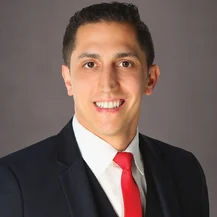
CEO, Quad A
Tom Terranova is CEO of QUAD A, a nonprofit accreditation organization founded in 1980 that reviews ambulatory surgery centers, med spas, and other outpatient facilities for quality and safety. He joined QUAD A in 2009 and has led the organization since 2019, after practicing M&A law at Greenberg Traurig and building predictive-analytics models for corporate risk earlier in his career. Terranova holds a JD, MBA, and MA, and has spent his career translating patient-safety data into standards that regulators, investors, and practitioners can act on. He is a frequent speaker on accreditation, risk, and the business side of aesthetic medicine.