The Hard Truth About Running Three Med Spa Locations


 RSS Feed
 Every ambitious med spa founder eventually hits the same fork: expand into satellite locations, or double down on one destination. Amanda Barrett tried the first path with Vadara Med Spa in the greater Seattle area, then reversed course to save her business, her staff, and her sleep.
Bill Walker talks with Amanda about why satellite offices sound smart on paper but crush rebooking rates and drain staff morale, how she consolidated three spas into one Mill Creek destination, and the leadership structure — four nurse practitioner managers who share the boss seat — that lets her stay in the injection room instead of running the floor.
Amanda also makes a strong case for meaningful complication training. Her team runs regular drills, and every RN and nurse practitioner on staff can pick up an ultrasound, find an abnormal area, and treat it. She frames it as a moral obligation: if you cannot treat the complication, you do not get to perform the treatment.
A candid look at the growth path a lot of aesthetic founders quietly get wrong, with a working example of what to do instead.
Learn more about Vadara Med Spa
Questions answered by this episode
- How do you grow a med spa without burning out?
- Should a med spa open multiple satellite locations?
- What is the biggest mistake med spa owners make when scaling?
- How do you train med spa staff to handle a filler complication?
- How do you empower nurse practitioners to manage a med spa?
- What is the difference between a med spa and a wellness center?
- Is functional medicine a good add-on service for a med spa?
- How do you keep rebooking rates high in a med spa?
- Should a med spa owner also be the manager?
- How do you build a leadership team that runs the practice without you?
GUEST
Amanda Barrett, DNAP, CRNA
Founder, Vadara Med Spa
Amanda Barrett is the founder of Vadara Med Spa, a medical aesthetics and functional wellness center in Mill Creek, Washington. A doctorate-prepared CRNA with a background in operating-room anesthesia, she built Vadara from a single rented treatment room into a consolidated destination practice known for double-digit annual growth, deep injector training, and an empowered leadership team of nurse practitioner managers. Amanda is passionate about complication readiness, patient safety, and expanding into longevity and functional medicine alongside aesthetics.
Connect with Amanda on LinkedIn
Follow Amanda on Instagram @amanda.vadaramedspa
About Aesthetic Appeal
Aesthetic Appeal is where Aesthetic Brokers brings you the latest insights straight from Southern California. We break down what's happening in the medical aesthetics world—especially when it comes to private equity and transactions with mergers and acquisitions that matter to you as a practice owner.
Learn more about Aesthetic Brokers
Follow Aesthetic Brokers on Instagram @aestheticbrokers
Theme music: Blinding, Cushy
Amanda Barrett (00:00):
I have a moral obligation as a practitioner that I want to know how to treat any complication that lands in my lab. I'm not just another med spa on the corner. We are a center of excellence and we take that very seriously.
Bill Walker (00:26):
Welcome back to the Aesthetic Appeal Podcast, the official podcast for Aesthetic Brokers. Today with us, we're live at the Aesthetic Show at the beautiful Wynn Resort. And we have in the founder's circle with us, a founder from the Seattle, Washington area who has incredible growth and is going to explain just how this all came about. With me is Amanda Barrett, the founder of Vadara. Amanda, welcome to Aesthetic Appeal.
Amanda Barrett (00:58):
Bill, it's so good to see you. Thank you so much for having me. I'm so excited to be here today.
Bill Walker (01:03):
I love this. Amanda has the best energy of anyone that I've ever come in contact with who is this delicate balance of hyper competitiveness with herself to exceed goals and this really grounding, chill, relaxed, sophisticated vibe. And I'm very curious, I'd like to start our conversation off with this, is how do you create an environment where you guys have grown so rapidly over the last several years, but yet you make everybody feel so relaxed and at ease around it?
Amanda Barrett (01:41):
Well, that's very nice of you to say. I really believe in having a culture where everyone feels like family, where we're all very comfortable with each other. I have a whole leadership philosophy of, I don't want to be a dictator. I don't want to be authoritative. I'm not punitive. I'm very empowering and embracing. I just think when everyone feels good in a day, that spreads and then all of our energy just gets put together for the better. When I see someone and we're both smiling and we're both releasing dopamine, that just sets the stage for a very successful day.
Bill Walker (02:19):
So I want to ask another question about the growth status for you guys. Take me back to the early days of the practice. You experimented with several satellite offices and then you decided to do something very drastic that was very powerful. Talk me through what you made a decision on and why did you do that?
Amanda Barrett (02:39):
That kind of takes me back to the beginning. I'm a CRNA, so for those of you that don't know, that's a nurse practitioner with an emphasis in anesthesia. So I was practicing in the operating room, but I always had this insatiable desire to practice aesthetics. I love aesthetic medicine. Deep down, I have an artistic side that I really wanted to explore a little bit more. That and I love getting injected myself. So I decided to start a small little company, little side hustle, a hobby if you will. And I rented a room in a day spa where they already did skincare and I was just doing it a couple days a week on my days off and it really just took off. My books were full the day I opened and I just had this huge demand. So I started coming in, in the evenings on my way home from work and realized that I had something really special here.
(03:42):
People open up med spas all the time and it takes time. It takes momentum. And that just happened very organically for me right up front. So I knew I had something special.
Bill Walker (03:56):
So you took off on the concept of, I'm going to do this in my spare time and you were booked immediately.
Amanda Barrett (04:05):
Right, right. People were lining up to get on the books. I was booking out months in advance and I -
Bill Walker (04:11):
So this was one room?
Amanda Barrett (04:12):
This is one room in a day spot and I'm just working on my off days. I knew I had potential and that this was really going to grow. So I started chipping away at the hospital coming in more frequently and my books just stayed steady and full. So I ended up hiring a couple injectors to work for me.
Bill Walker (04:35):
At the same location.
Amanda Barrett (04:36):
At the same location. We ended up renting a couple of rooms in there.
Bill Walker (04:40):
So now you expand to a couple of rooms.
Amanda Barrett (04:42):
Yeah. We're kind of playing musical rooms there and trying to get in as many days as possible. And then I had this idea, I have low overhead. I have this great well running machine. Why be a destination when I can literally be in your backyard? People don't have to drive to me. I'll have a small room with low overhead and we're in everyone's little community. So we started off, we purchased another space, a little small room and we were operating about 30 minutes south of my original location.
Bill Walker (05:16):
Which for me as analyzing the financials and the operations of the practice seems like a really logical move. You start out at a low overhead, it's a distance, it's acceptable so you're not cannibalizing your current location. That sounds like a good idea. And how did that play out?
Amanda Barrett (05:37):
Right. On paper it makes sense, right? Oh my gosh. Low overhead. We're in everyone's community. Everyone loves us. It's great. Well, it's incredibly hard to manage three separate locations that are one room satellite spas, essentially. My poor staff is doing all the meeting, the greeting, the checking out, rebooking. I mean, our rebooking rate was pathetic. It was like 25%. We just didn't have time and the girls didn't have any support. So not only do I have an unhappy staff, I'm exhausted. I'm trying to communicate through texts all day long. Meanwhile, my books are completely full.
Bill Walker (06:21):
So you're getting oversaturated because of the demand for you at all these locations that you're traveling around to, plus you're trying to manage the team from your phone. And had you walked away from hospital work completely at that point?
Amanda Barrett (06:37):
Not completely. I was -
Bill Walker (06:38):
You're still working at the hospital too.
Amanda Barrett (06:40):
I love torture, right? It took me until actually November, just a few months ago, I finally quit the hospital, but I was doing both.
Bill Walker (06:52):
Yeah. Your work ethic is unparalleled. Whenever I feel like we're catching up or chatting, there's the time slot that's always the before 7:30 AM and the after 7:30 PM like six days a week, which is an incredible testament to the work ethic.
Amanda Barrett (07:09):
Well, we're all a glutton for punishment, I guess.
Bill Walker (07:13):
So what did you build up to in satellite office number count before you decided to make a strategic pull?
Amanda Barrett (07:19):
We were up to three separate locations and really I just had no quality of life. It was really difficult to manage three separate locations. I did have an offsite manager, but she can only do so much being offsite. I would want to go home at night and I'd realize that my spa down in Mill Creek needed inventory. So you don't go home, you go and run inventory. It just no way to live. So we decided to take everything and put it under one roof and put it in one location.
Bill Walker (07:56):
And which location was this?
Amanda Barrett (07:57):
Mill Creek, which is about 30 minutes north of Seattle. And I realized, why am I afraid of being the destination when people like us?
Bill Walker (08:07):
So now when you pull everything into consolidation, you pull everything into the Mill Creek office, which is a beautiful location. It's kind of like walking through the Starship enterprise a little bit. It's the sound, the walls are curved, the lighting underneath of the white walls is gorgeously underlit. You pull it into one location. What's a key lesson that you took from being disaggregated to being in one centralized location from running operations and training your team perspective?
Amanda Barrett (08:42):
Oh, I mean, I think the thing that stood out to me the most is I have my team together. I'm going to utilize this. This is a perfect time to train all day, mentor, coach, lead the team. When people have a slow day, they can watch me in my room and learn from me and take on new techniques, but we're finally together. We can finally learn from each other. We can finally grow together as a unit.
Bill Walker (09:13):
And one of the things that's impressive about Vadara is they've accelerated double digit percentage growth year after year after year. I would like you to maybe speak to something that you've told me in the past, which is you do something very unique at your practice with cross-training of leadership. Could you maybe talk to some of that?
Amanda Barrett (09:32):
Absolutely. I mean, at the end of the day, I have to have quality of life, right? I love being a business owner, but I also want to be able to go home. I want to be able to take time off. I want to be able to sleep at night. So really that decision making process came to fruition of selfishness. I don't want to be the person that's in charge all day. I'm a revenue producer. I want to be producing revenue. I want to inject. I want to interact with my clients. I don't want to be the boss. So I hired four different nurse practitioners that are all the manager of my spot. When they're scheduled, they know that they're the ones doing ordering, inventory, all of the management, so I can go in my room and inject. Really at the end of the day, I want to get sleep at night.
(10:24):
So I know that when any of my girls are there, they have everything covered and they're my boss.
Bill Walker (10:32):
How does it feel for your team to know that they're trusted to run things when you're not at the ready? And what does that sense of empowerment feel like for them?
Amanda Barrett (10:45):
Well, my leadership style is all about empowerment. I never want to be the biggest person in the room. I want my staff to outshine me. I want them to teach me things and I want my girls to know that I hired them because they're good practitioners and I fully, fully trust them and I do. And I think that we're such a well oiled machine because no matter who is on vacation or taking time off, we're not going to skip a beat and it'll be business as usual.
Bill Walker (11:17):
One of the things that stood out in conversations with you in the past about your injectors and the level of clinical acumen that you really focus on with them, would you maybe talk about some of the technologies that you incorporate when you're doing injections, injection training, the very remote off chance of a crisis situation and how you train your team to handle those because I think that is usually bottlenecked at one person in an organization, but that's not the case with you.
Amanda Barrett (11:47):
Oh, absolutely not. I mean, at the end of the day, aesthetic medicine is fantastic, but we all dread that day where a complication can occur. They're rare in aesthetics, which it's both good and bad, right? Nobody wants a complication, but when they rear their head, practitioners feel like a deer in headlights. They don't know how to react to it because we just don't see it that frequently. So I believe in being very proactive and being in front of that. Our team spends hours of training on kind of crisis training. If this happens, what do we do? We run drills. Every single staff member of mine knows how to treat a complication. We have an ethical and a moral obligation to our patients that if we're performing a treatment on you, we know how to treat the complication if we were to have one. So every single RN, every single nurse practitioner knows how to pick up an ultrasound, find an area that looks abnormal and treat it.
Bill Walker (12:55):
Wow. That to me is really impressive because it's time that people cut corners on sometimes not because they're doing something that's immoral or wrong, they're just trying to save time to maximize their results. And I think it's such a unique take that you invest in that because you see it as I'm going to maximize results because my team is more confident in what they're doing on a patient on a day-to-day basis in case a crisis does happen, they feel confident that they can take care of something that might pop up.
Amanda Barrett (13:30):
Absolutely. You're spot on. I think people avoid complication education. For one, complications don't bring us money. So why are we spending our time and education learning about it when we could be learning how to make more money? But I have a moral obligation as a practitioner that I want to know how to treat any complication that lands in my lab. I'm not just another med spa on the corner. We are a center of excellence and we take that very seriously.
Bill Walker (14:04):
You burgeoned into the field with a focus on aesthetics and in recent times you've started to expand the scope of what you see that your clients and patients are asking for. What do you think longevity and aesthetics looks like together under the same roof?
Amanda Barrett (14:24):
They're interdependent. Honestly, our treatments, our lasers, everything works better if you're healthy on the inside and you're not going to feel good about yourself if you don't feel good on the inside. But not only that, I'm very passionate about longevity and regenerative medicine because in our society, our medicine is very reactive. We're not proactive. So we wait for people to get sick and then we give them harsh medications that aren't great for their bodies. It blows my mind that we're not more proactive. We should be looking at the individual, getting down to the root cause and preventing illness, not just reacting to it.
Bill Walker (15:10):
What do you think is going to be something new that you're excited about that you want to incorporate for your patients that you've seen a demand signal?
Amanda Barrett (15:21):
At the moment, we have a fully operating functional wellness division in our medical spa. We're more than a medical spa, we're a wellness center. And I just think that there's so much potential in functional medicine, really getting down to the root cause of why people aren't feeling well. I have a wonderful practitioner, her name's Sarah Miller. She has a heart of gold and a personality to match it. And she is just so passionate about making people, why do you not feel well? Let's figure this out. Let's work together. And she even helps women with fertility issues, people with autoimmune disorders, and we're really tapping into the potential functional medicine right now is kind of our heavier focus with wellness at the moment.
Bill Walker (16:13):
One thing that you brought to light for me was that inside of Vadara, you keep a bifurcation of keeping people who love to specialize and are passionate about aesthetics, focused on aesthetics. And then the other arm of people who are passionate and enthusiastic about longevity and functional medicine, stay focused on functional medicine. Why did you make that decision?
Amanda Barrett (16:43):
I believe that to keep team members motivated and passionate about what they do, you have to let them practice what they're passionate about. If somebody wants to be in aesthetics, they're not going to want to talk hormones and peptides. So I really want people to tap into what really drives them because that's where they're going to thrive.
Bill Walker (17:04):
Amanda, you've taken a team, you've consolidated, you've used that time to empower and train and build confidence in their care skill sets. You're expanding into the functional medicine longevity. I think it's incredibly poignant to point out that here's a CRNA, you've done very sophisticated advanced training, but yet there's a sense of humility of I know my limitations of what I want to do, what I can do and do extremely well and I need to focus my energy. Having said all that, my kind of final parting question though for you is if you were talking to founders, founders that are listening to this episode and they're listening to the things that you did along the way to become such a success in the greater Seattle area as a med spa, if you're going to coach a now version of Amanda, what is one piece of advice that you give Amanda now that you learned along the way in building out the dark?
Amanda Barrett (18:15):
If I could really pinpoint the thing that helped me the most is honestly slowing down and taking it one day at a time. There is such a huge world in aesthetics and longevity and you innately want to do all of it. I want to provide every service that I see in the aesthetic show, but again, I need to know my limitations and that I'm just one person. I can't do it all overnight. It's coming. And just slow down, enjoy the journey, learn things and master them before you pick up a new skill.
Bill Walker (18:55):
I love it. Amanda, thank you so much for joining the Aesthetic Appeal podcast.
Amanda Barrett (19:00):
Thank you so much for having me.
Bill Walker (19:02):
There you have it folks. If you're in greater Seattle, you should look up and you need to look up Vadara Medical Spa. They are a center of excellence when it comes to treating patients at a very high caliber and the burgeoning functional medicine that they've created inside of the aesthetic practice is real and tangible. If you like this episode of the Aesthetic Appeal Podcast, please tune in and click us and we look forward to having you on the next episode. I'm Bill Walker, CEO of Aesthetic Brokers signing off.
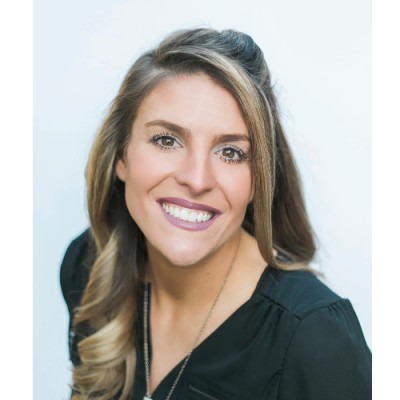
Amanda Barrett is the founder of Vadara Med Spa, a medical aesthetics and functional wellness center in Mill Creek, Washington. A doctorate-prepared CRNA with a background in operating-room anesthesia, she built Vadara from a single rented treatment room into a consolidated destination practice known for double-digit annual growth, deep injector training, and an empowered leadership team of nurse practitioner managers. Amanda is passionate about complication readiness, patient safety, and expanding into longevity and functional medicine alongside aesthetics.