Why Your First Offer Is Never the Best Offer


 RSS Feed
 Email blasts, cold calls, and decks full of stats stack up for months before most aesthetic practice founders are even ready to sell.
The buyers on the other end of those messages know exactly what they're doing — they're hoping to lock in a deal before anyone runs a competitive process. The question is whether you understand the playbook well enough to recognize one when it lands in your inbox.
In this solo episode, Bill Walker breaks down how private equity actually structures deals for medical aesthetic and longevity practices. He walks through the difference between a joint venture and an asset purchase agreement, then explains how cash at close, rollover equity, promissory notes, and earnouts each play a distinct role in your total deal value.
Bill explains why a $10 million enterprise value rarely lands as $10 million in your bank account, why rolling 30% equity is a long-horizon bet against the S&P 500 rather than a liquid stock position, and why an unlimited earnout is almost always a worse deal than a tangible one tied to a measurable growth target. He also covers the bonuses and incentives that quietly shape your final number — and what a retrade feels like when you went into the deal without representation.
Stay through the end for Bill's read on the quiet shift among private investors toward whole-body, whole-aesthetic platforms, and why founders who go it alone tend to leave more than 30% of their deal value on the table.
Questions answered by this episode:
1. Should I sell my med spa to private equity?
2. How much is my aesthetic practice worth to private equity?
3. How do private equity firms value medical practices?
4. How are private equity deals structured for healthcare practices?
5. What does cash at close mean in a private equity deal?
6. What is rollover equity in a practice sale?
7. What is a typical earnout in a private equity deal?
8. Do I need an M&A advisor to sell my medical practice?
9. What is the difference between a joint venture and an asset purchase agreement?
10. What is a promissory note in a private equity transaction?
HOST
Bill Walker
Founder & CEO, Aesthetic Brokers
Bill Walker is the Founder & CEO of Aesthetic Brokers, where he leads transaction advisory for medical spas, cosmetic dermatology practices, and plastic surgery centers. Prior to founding Aesthetic Brokers, Bill led mergers & acquisitions for a large private equity-backed healthcare services organization, where he helped doctors unlock hundreds of millions of dollars in generational wealth. He is a nationally recognized speaker and thought leader in healthcare M&A.
Bill began his career as a Marine Corps pilot, ultimately serving under two administrations at the Presidential Helicopter Squadron and commanding a squadron in combat.
Follow Bill on Instagram @aestheticbrokers
Connect with Bill on LinkedIn
About Aesthetic Appeal
Aesthetic Appeal is where Aesthetic Brokers brings you the latest insights straight from Southern California. We break down what's happening in the medical aesthetics world—especially when it comes to private equity and transactions with mergers and acquisitions that matter to you as a practice owner.
Learn more about Aesthetic Brokers
Follow Aesthetic Brokers on Instagram @aestheticbrokers
Theme music: Blinding, Cushy
Bill Walker (00:09):
Welcome back to Aesthetic Appeal podcast, the official podcast of Aesthetic Brokers. Today's episode, we're talking about private equity in the private equity playbook. So often we get comments from clients that say, Bill, I've been solicited nonstop for the past six months by private equity firms and strategic buyers sending me emails, calling me, sending me all of these different stats about their private equity firm and how they want to buy my practice. And I don't know if it's a real thing. I don't know if they're credible. I don't know if it's a good deal or not, but I just don't know where to start. However, I don't want to miss an opportunity if there's a good opportunity to be had. Here's the reality for most founders of very successful longevity clinics, anti-aging clinics, medical aesthetic practices. Your first offer from a private equity firm is not the best offer.
(01:17):
It's the best offer that they think they can give you in order for you to say yes before you drive a competitive process. And that's the truth. Now, in a free market society, if you think that that's a fair offer for what you're worth and they're treating you right, then that could be a great deal for you. The reality is most people have spent their entire career focused on building this exceptionally successful med spa group that you can't possibly trend, track, and monitor all of the nuances that go into over 200 plus healthcare private equity firms that would be interested in a medical aesthetic or longevity practice for this space. And that's what we're here for. That's what we do. At Aesthetic Brokers, we keep our fingers on the pulse of all of the buyers, all of the transaction activity that goes in the space, and we understand all the nuances of what you should be really looking for in a great deal.
(02:23):
The reality is that you've got to go through an entire workup package to understand what the true value of your practice is, and let us do a valuation on your practice so we know what it's worth. There's other intrinsic values that come in with the operational and the procedural clinical efficiencies and excellences that you build into a trusted platform brand. And those aren't to be discarded. It's not just a pure EBITDA game, but it's a heavy EBITDA game. And so one of the things to realize too is that sometimes we tell our clients, "Hey, our job is to drive a competitive process for you. " But a competitive process sometimes means seven, eight, nine buyers at the table at the same time. Sometimes it might be a competitive process for the two most select buyers. And on a rare occasion, a competitive process could be, "Hey, we know because you're a large platform, that there is a discreet off market buyer that's interested in starting a MedSpa platform with a founder practice like yourself, and we can drive a competitive market like that as well." And so it's not necessarily always the number of suitors that are at the table, the number of prompt dates that are on the kissing couch waiting in the foyer for you.
(03:49):
It's really about finding that perfect offer that we can drive up the intrinsic value, drive up the dollar value, and drive a true marriage for you that's going to make you extremely happy and is going to absolutely change the landscape of what you thought was possible. So let's talk about the private equity deal structures, because I think it becomes very confusing for a lot of people, earnouts, cash at close, equity role, promissory notes, bonuses, incentive plans, all of the things that you could possibly think about, a joint venture model versus an asset purchase or a stock sale for 100% of your practice. All of these things can get very confusing for owners, and that's what we're here for is to help break that down. So I'm going to jump into a joint venture model, which is one of the most complex scenarios that a lot of owners see.
(04:46):
Now, a joint venture model can have a lot of different variations, but at its core tenant level, a joint venture model is a practice is being evaluated on 100% of the total enterprise value of the group. And then the buyer says, "Of that 100%, we want to buy a majority interest typically in your practice." So let's say that you are a $10 million deal, enterprise value, right? And let's say you were $2 million of EBITDA. $2 million of EBITDA, it's a $10 million deal and the investor wants to buy 60% of your practice interest and you retain 40% in distributions. So in that kind of a model, which you can imagine is $1.2 million of cash flow each year, if the practice never grew, would go to the buyer and then the other $800,000 of EBITDA cash flow of net income, for lack of a better term, at the end of the year, would go to you as the retaining owner.
(06:00):
Now, they're going to put a $10 million enterprise value on that. And so they want to put a chunk of money for 60% of that that they're going to buy. Let's say they want 50 points of the 60 points to be in cash at close. So they say, "Okay, it's $10 million valuation. We want to buy 60%. We're going to buy $6 million worth of the enterprise value. We want 50 of the 60 points to be in cash. And so here's five million of cash." And you say, "Thank you very much." And they say, "And then we want to have 10 points, a million dollars be in an equity role." And you say, "Okay, I got it. I'm going to roll a million dollars of equity in your greater company, your holding company." The holding company is like an umbrella and you have all of these different strings with all the different jewels that are dangling off of the umbrella and you're one of those jewels as a company on that umbrella holding company and you kind of have an interest that's diversified in some aspects and think about it from a geographic de- risking standpoint.
(07:03):
You can think about it from a production mix standpoint, no two practices produce the same percentages of revenue from the same procedures. And so you're kind of diversifying yourself a little bit in that regard, but you're kind of keeping a big chunk of interest in your own practice. And so that's oftentimes how you might see a joint venture. Well, you say, "Well, Bill, what happens at the end of five years and a commitment with them on my ownership and my practice? Do I just keep it? " Well, the answer is it depends. Some people allow you to pick who you're going to sell it to and you sell to that person for above market or below market of what it's worth for your $800,000 of cashflow a year. You put a multiple on it and you sell it and you walk away at the end of five years.
(07:48):
Sometimes there are groups out there that have creatively designed and said, "Hey, we're going to give you a 7X, a 6x, a 5X on your cash flow. And so we'll pay you that 5X cash flow that we paid upfront on the other 800,000. Here's another $4 million of cash for you to exit the practice." Whatever that structure looks like in terms of numbers, the bones of that idea remains consistent. They want to buy a majority interest while you retain a stickiness to the practice for this cashflow drip each year, and you get some sort of reward upfront. Now let's talk about asset purchase agreements. Asset purchase agreements, you might think, "Oh, they're buying the assets of the company." Well, Bill, on a previous episode that you talked about, you said selling the assets of your company really aren't worth all that much because those are used lasers, those are used energy based devices, they're, "How am I going to get the value?"
(08:52):
Well, again, I kind of go back to the concept of how are those devices being used. And in its core, an asset purchase agreement is a combination of the hard assets and the goodwill of the company that generates all of this cash flow. And so in that $10 million deal, they would maybe buy 100% of your practice. And in buying 100% of your practice, let's think about the components of that true deal value. And we talk about that in terms of cash, the rollover equity, also think of it as like a privately held stock. And then the other aspects that I talk about is a promissory note, which is an IOU loan that you give them and earn outs or bonus money and incentive money. Now, let's talk about the cash component because it's the easiest to get out of the way.
(09:48):
$10 million deal, we'll use the same scenario as before. They say we want to pay you 50% of that in cash. So they give you $5 million. And then they say, "We would like you to keep skin in the game, just like you did in a distributions model with joint venture, but in this scenario, we want you to roll equity in the greater company with us. And we want to sell not your practice, but a group of 40 or 50 practices five, six years down the road for a premium multiple to a mid cap or a large cap private equity firm as an exit strategy." And those can be incredibly lucrative deals. They can come with their own risks and nuances that are painful. Your money's not in a stock market portfolio where you can exit at any time. You're making a long-term committed capital investment of your equity role with the idea that because it's committed for a longer period of time with one group of like- minded individuals, that you're all rowing the boat in the same direction to get an outsized premium than what you might on the free open markets.
(11:00):
What that means is you're trying to beat the S&P 500. That's what a lot of people try to beat by doing so. Oftentimes it's taxed in most structures under a capital gains rate. And so you're trying to beat the market and in doing that, you're putting your eggs into one basket with other owners, putting their eggs into the basket with the private equity company who's putting their eggs into the basket. Now, let's say that 30% of your deal, $3 million was an equity. You would sell your practice, you would get issued shares or units because it's a privately held company, units, units in the new company, and you would own those units at a certain strike price of value. And the goal is that it produces two, two and a half, three, three and a half, four times value on an exit when all of the companies sell as a conglomerate upstream for four times the value, six, seven years down the road.
(12:04):
Well, you could say, "Well, that's kind of an attractive opportunity there is that there's perhaps a slight increased risk, but I like that outsized return than if I were to invest my money in the S&P 500 markets or the Dow or any other free open markets, right?" The more conservative your appetite, the likely the less reward that you get. If you want to invest your money in a treasury bill, for example, you might fetch a 4% return and the open free markets of the S&P 500 the past few years, it's up until a recent decline that we've seen with international affairs, you would see a 15% plus draw on your return. And so when you think about rolling 30% equity, you're not able to withdraw that money because you don't like what's going on in the markets. You're committed to a long-term strategy for several years with your investment group that you're a part of.
(13:04):
And in doing so, you believe that you're going to be able to return outsized value in your portfolio. So now we're at about 50% cash, we're at 30% equity. And let's say that you're going to have a 10% promissory note and they say, "Look, we want you to maintain a 10% promissory note with us at a certain annual rate that you're going to charge us." And then once we sell the company, we'll pay off all of the interest compounded plus the principle with a timeline that meets the goal exit of the group. Well, depending on how you treat that promissory note, that IOU, that loan that you're issuing them, as long as you put some safeguards in place to protect yourself, it's a smaller return, right? It's single digit percentage returns oftentimes, but it's a slightly higher on the food chain of likelihood of getting paid your money on that.
(14:10):
Now, let's look at the last 10% or so that we're talking about here, which is we'll use the example of an earnout. And people ask me, "Bill, what's an earnout? What does that mean?" Well, I like earn outs. And they also ask me, "Do you like earnouts? Do you not like earnouts?" My answer is, I like earnouts if there's a tangible, achievable goal. When somebody puts a goal of an unlimited earnout on something, I think that we intend to lose focus. And as humans, you don't stay on target with what you're trying to achieve, and therefore you underperform on your earnout expectation. But if you essentially think about an earnout is giving you forward credit for achieving a growth rate that's above the normal. I like to tell people, "Hey, look, a three to 5% growth rate per year is normal." So if you want an earnout, you should be thinking, "What am I growing the revenue of the company beyond three to 5%?" If you're getting a deal that is going to pay you an extra million dollars for generating 10% more growth revenue, depending on how big your practice is, that could be a great deal and it's very achievable.
(15:25):
And so for those reasons, I like earnouts. Earnouts can be structured in cash. They can be structured in cash and equity of the company. There's a variety of mechanisms that you can put into an earn out, but in general, if you're growing greater than three to 5% a year, and someone wants to add additional compensation value in the deal to make themselves more competitive for you, I like to talk through what an earnout structure looks like for our clients. Now let's talk about that last component about incentives and bonuses. One thing that you have to realize is that your total deal isn't always just about you. It's about the team that helped get the company to the success that it is now. And usually those come in very small but noticeable rewards for a couple of key tenant holders, a couple of key stakeholders in the organization.
(16:18):
And so you need to think that your overall deal value, although you don't receive that compensation, it is intrinsically a value that's associated with the company. And so in those scenarios, you've got to think about bonuses, bonuses for team members who are high performers. And we always like to think of how are they aligned with the goals of the founder. If the bonus is structured in a way that it keeps the alignment of goals with the high performers, with the founder over the next year or two years or three years, then that's a great incentive bonus to have as a firm, because now you're guaranteeing that your future success and your equity or your earnout is aligned completely with your staff. And the last thing I want to talk about is incentives. So incentives can come in a variety of fashions. Just know that oftentimes incentives are going to be in play when you're an early stage founder in a company, or you're taking on a key role in the greater organization that no one has fulfilled yet.
(17:27):
An example, if you're a chief medical officer for a brand new MedSpa platform, and they did not have a chief medical officer yet, you might be able to have a scenario where you can imagine receiving incentive for compensation purposes for down the road, and that can oftentimes take place in small amounts of capital or can take place in the form of equity shares. And so these are the most comprehensive, thoughtful buckets when I talk about monies, the buckets of monies that you think about with a deal, and there's so many nuances and so many structures that go into these things that it's always great to just set up a time to have a meaningful video conversation and talk through what these look like for you as a founder. One question that we get from owners is they went into a situation with a buyer on their own and then they felt like they were quote retraded.
(18:27):
When you hear someone say retrade, it tends to put a pit in your stomach because they don't feel great about it. And I think it comes down to there were not clear definitions of what the true value of the practice was worth and the open dialogue before anything was signed into a letter of intent of what happens if we get to a stage where you've advertised that we believe the value of the company is X, but we've uncovered that the value of the company is less and it is why. The why is the key question. Why is the company now being valued at less than what it was before? And there's a litany of things that go into that consideration and those calculations. One of the most important decisions that you're going to make is not actually who you're partnering with in your deal, it's who you're going to partner with to represent you in your deal.
(19:23):
And so it's really important before you ever go to market or before you ever sign anything with any buyer is just pick up the phone and call us and get some free advice. I think at the end of the day, we feel very confident with our clients that based on performance, it's better to know us and know what we can bring to bear on your behalf and have that layer of protection because it tends to significantly outperform in results. A lot of our clients, you see on average, well over 30% of deal structure and value greater than what they could have done on their own. Now, that more than pays for fees of what you're looking for because we base the overwhelming preponderance of our fee structure off of a success fee. And so it's really important for owner founders to get aligned with someone who's going to represent them and their values and their goals, and then give you the straight scoop on what you're really worth.
(20:30):
I'll tell you one thing that we see happening as the ground is moving beneath our feet that doesn't get talked a lot about in the open press, and that is, there's a real shift among private investors into a whole body, whole aesthetic play for the client and the patient. And that comes down to incorporating aspects of longevity, wellness, and aesthetics all under one roof. It makes sense that if you look good, you feel good. And if you feel good, you play good. There is a lot of research. There's a lot of dedicated time being focused on uncovering the window of people who are in their early 30s into their mid- 40s that are appreciating the longevity factor and how they're going to look and feel and operate for the next 50, 60, 70 years. People are going to live 80, 90, 100 years into the future, and they want to operate and function at a high level.
(21:41):
And so you see things like functional medicine coming into play with a longevity play with an aesthetic play. And private equity firms, private investors, strategic investors are all noticing that, and they're making a quiet shift to incorporate all of those aspects into the daily lives of their clients because it's what their clients want in order to be able to plan their lives out to be successful for a long period of time. When it comes down to it, a real competitive process is a process that has an army of people working on your team, fighting for you to get you the best deal possible, whether that's one deal, whether that's two deals, or whether that's 10 deals coming to the table. The fact that you've got your team in your corner planning and strategizing ahead of time before anything comes on your lap is critical to being prepared for battle.
(22:45):
And so that's a lot of times what we as an M&A firm focus on is filling that gap for you in your timeline of what you need the most at the critical juncture that you need it. You get one chance to sell your practice. You're going to sell your practice one time on your own. It's best to have a copilot with you from takeoff to landing that can walk through everything with you and make sure that you get the best, the best deal possible.
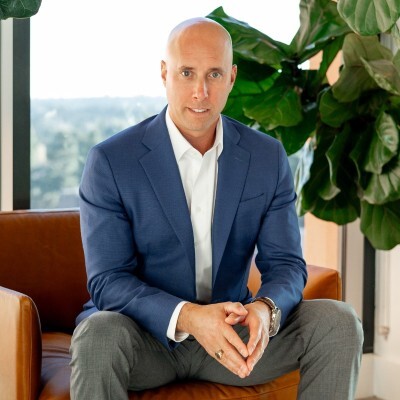
Founder & CEO, Aesthetic Brokers
Bill Walker is the Founder & CEO of Aesthetic Brokers, where he leads transaction advisory for medical spas, cosmetic dermatology practices, and plastic surgery centers. Prior to founding Aesthetic Brokers, Bill led mergers & acquisitions for a large private equity-backed healthcare services organization, where he helped doctors unlock hundreds of millions of dollars in generational wealth. He is a nationally recognized speaker and thought leader in healthcare M&A.
Bill began his career as a Marine Corps pilot, ultimately serving under two administrations at the Presidential Helicopter Squadron and commanding a squadron in combat.