Why Raising Your Prices Is Almost Always the Wrong Move


 RSS Feed
 Most consultants will tell you one thing when revenue stalls: just charge more per unit. Jessica Hunter, Head of Aesthetic Consulting at Aesthetic Brokers, has watched that advice quietly cost practices money for years. Her position is simpler — pricing is a strategic tool, not a number to bump every January.
Jessica walks through three distinct pricing levers most owners collapse into one. Acquisition pricing creates urgency for a first visit. Retention pricing rewards a returning patient who books inside the optimal window — for neurotoxin, that's roughly every two-and-a-half to three months. Volume pricing reflects the truth that 10 units and 40 units take about the same chair time, but only one of them pays the room.
The metric that drives all of it isn't price per unit. It's average transaction value. Jessica shares the client doing $60K to $70K a month in neurotoxin with a $450 ATV, where the right move was building frequency, not raising the menu. Cost of goods barely moves the math. Provider type and minutes per appointment do.
The clearest example sits at the end of the episode. One client's neurotoxin revenue jumped from $18,000 in January to $39,000 in February on three additional patients — same hours, same provider, restructured pricing.
Questions answered by this episode:
- How do you price Botox profitably in a med spa?
- Should I raise my Botox prices to make more money?
- What is average transaction value in an aesthetic practice?
- How do you make neurotoxin services profitable?
- How long should a Botox appointment take?
- How do you get Botox patients to come back more often?
- What is the best pricing strategy for a med spa?
- How do you price add-on services in aesthetics?
- Is a lip flip profitable as a standalone service?
- How does provider type affect neurotoxin profitability?
HOST
Jessica Hunter
Head of Aesthetic Consulting, Aesthetic Brokers
Jessica Hunter is the Founder & CEO of Hunter Consulting and Head of Consulting at Aesthetic Brokers, where she helps medical aesthetic clinics grow smarter and stronger. She's partnered with more than 75 clinics across Canada and the U.S., guiding them to boost profits, streamline operations, and build lasting success.
Known for her energy, straightforward approach, and genuine care, Jessica believes the best advice comes from truly understanding each business, especially its financial health and unique challenges.
Follow Jessica on Instagram @hunterconsulting_
Connect with Jessica on LinkedIn
About Aesthetic Appeal
Aesthetic Appeal is where Aesthetic Brokers brings you the latest insights straight from Southern California. We break down what's happening in the medical aesthetics world—especially when it comes to private equity and transactions with mergers and acquisitions that matter to you as a practice owner.
Learn more about Aesthetic Brokers
Follow Aesthetic Brokers on Instagram @aestheticbrokers
Theme music: Blinding, Cushy
Jessica Hunter (00:09):
So for today's podcast, I really want to talk about this notion that people keep saying all the time is you just need to raise your prices. And it's almost always the wrong advice. How strategic pricing works is it's built around our particular goals and honestly what we're trying to achieve, not just increasing your price per unit for your neurotoxin. So what does it mean when we talk about pricing as a strategy and how is that different than just increasing our prices on our service menu? Well, first and foremost, we want to utilize our pricing in different tactical ways. So for example, if we're talking about patient acquisition, we would have a price point that would be incentivizing. So we're trying to create urgency. We're trying to create an incentive for someone to come and have a first experience with us and have a really, really great positive experience.
(01:02):
And so we might adjust our pricing to acquire that patient. Now once they come in, they come in and see us and have a great experience, we need to retain them. And so how we might adjust our pricing from there is what we might want to do is we might want to offer something that allows us to control our frequency and our volume. And so how we do that is for example, things like we want to see you before three months is up for your neurotoxin. So we know that that's the optimal outcomes. We want to see them between two and a half and three months. And so how do we want to incentivize that sort of level of frequency? Well, what if we offer a certain price point if they book within that time period? Because it's advantageous to us for them to come in four times a year for neurotoxin, for example, and have that level of consistent frequency and retention versus them come in once for that patient acquisition price and never see them again.
(02:04):
And so is there an incentive to book them at a preferred price point if they come in within that time period? Absolutely. And that's how we maintain frequency. Now, how do we maintain volume, right? So for most of you that have worked with me, you know that I'm a really stickler on assessing all of your prices. I really like to go through your whole service menu, what our actual costs are for our services, including our overhead costs and our cogs and our provider and the allotment of time. And I really want to understand how we're profitable. And one of the things that we always come to the same conclusion on is neurotoxin is essentially a volume game. And so for us to be profitable in that service line, for example, it is based on how much volume. Someone coming in for 10 units versus 40 units is drastically different and the allotment of time is usually about the same amount of time.
(02:59):
And so how can we control that in our pricing strategy? Well, what if there's a different price point for a certain volume versus a lower volume? And that incentivizes someone to be able to get the actual volume, let's be honest, that they need to get that optimal outcome versus someone coming in for a smaller volume that isn't going to give them the results they want, of course, but also is not an impactful use or productive and profitable use of our time. And so we can use that foundation for our price points to help us leverage those different activities that we're trying to do, which is increase volume and increase frequency. And so that's one way that a pricing strategy can really help you manage the operations of your business, manage the patient flow and the influx and really understand how changing your price points can help with that.
(03:51):
So when we want to look at some of the metrics for pricing to allow us to understand how we should be pricing some of our services, there is really a difference between the average transactional value versus that price per unit, right? So before we do anything, when it comes to pricing, I would encourage you to have a really good understanding of what is our average transactional value for that service that we're looking at. That will allow you to really understand what is someone paying when they're coming in for that one treatment and allow you to kind of work backwards on that. If your average transactional value is $200 and we'll stay on the toxin topic for neurotoxin, well, that's going to tell you something right there is we know that that's probably too low to be profitable A, and B, our goal should be to increase the average transactional value per patient spend.
(04:51):
And so if that's our goal, again, we want to cultivate something that's going to allow us to get there, but we need to know what that is. And I'll tell you, I've sat down with some clients. I can think of one recently where we took a look at this and her average transactional value was $450 for neurotoxin and she does a ton of neurotoxin, probably in and around 60, 70K just of neurotoxin a month. And so good base of business to look at. So the conversation with her is like, "Yeah, we're probably at the range we want to be. Let's talk about your average clientele, how old they are, what they're doing. Do we want to offer more frequency than what you're currently getting?" Because maybe the conversation isn't really about, "Okay, we're getting that average transaction number is probably where we want to be, but they're not coming in as frequent." Okay, great.
(05:38):
So maybe our pricing strategy is to deliver on that need versus trying to increase the price of what we already have set right now that seems to be working very, very well. And that's how understanding the metrics will allow you to manipulate or adjust or change the prices to again, get you to where you want to get for the long-term goal. So to be profitable for neurotoxin on your first appointment will depend on two factors because of the two biggest line items, of course, in our business. And that's what we're paying for our cost of goods and what we're paying for our provider. For example, if we had a nurse practitioner doing neurotoxin, it becomes very difficult just because of how much we pay a credentialed provider as a nurse practitioner to be profitable in that line item versus if we have an RN doing the service, right, versus if we have a surgeon doing the service, which I've also seen.
(06:28):
And so part of it sits into who's doing the service in terms of profitability because how we pay someone is so significant in terms of cost. The second one is of course our cost of goods. And for the most part, Botox is 656 for a hundred millivile across the country. It doesn't change and Dysphore is 511. It's all kind of the same. And so we kind of know where we're at with that. Of course, we can be more profitable if we use a product that is less expensive. Of course, that's true, but that comes down to provider preference. And I don't use that as an area to change with my clients. I always say, I want you to choose the products that you feel deliver in the best results, and you're the provider, you're the expert, that's up to you. But the third thing that we can actually factor in to be profitable is time.
(07:21):
So if you have someone who can see four neurotoxin or Botox patients within an hour, it will dramatically improve the profitability versus someone who takes 30 minutes to do neurotoxin. That's just the truth. And so I believe that you can deliver a neurotoxin existing client appointment to the same caliber in 15 minutes that you can in 30 minutes. I do believe that that can happen and so that time is really where it's going to be profitable. So neurotoxin absolutely can be profitable on the first visit, but you have to think about who's doing the service, how much time is it taking? And you have to know what your costs are so that you know what the volume expectation is to be profitable because doing a lip flip as a single service, I have yet to se profitable. Absolutely not. So when we combine it, yes.
(08:12):
But like that's a great example of something that could be eight to 10 units at max and it's just not a service that typically we'd be profitable on because the volume's not there. It's an add-on service and add-on services also, by the way, is the gift that you as a medical aesthetic provider have. It is creating some services that actually cannot be booked as separate services. They have to be booked as add-ons. And we do that for a few reasons, but the majority reason is that we want it to be combined with another service because of the time. So I see this a lot in terms of like when we're talking about spa services, for example, because I'm just trying to think of a really easy example. There are certain waxing services that you should never, ever do as a solo services because you would not make any money off of it, right?
(09:03):
A lip or a chin or something that's a very simple service. But if it's an ad-on service, we have this ability to already add it on to an existing service and that's really where you're going to make the money. So I want to share with you about a story of a client I have that I've been working with for a number of months and last week, I believe it was or the week before, we're going through her Q1 numbers, must have been last week. So we're going through her Q1 numbers. And so we're looking at January, February, March and her service breakdown. We have her expenses, we're looking at her ratios. And so it's something I do with all my clients at the end of each quarter. And one of the things that really stood out to me is I said to her, "Hey, look at your tax numbers from January to February." So she went from $18,000 in January to 39,000 in February and I have the quantities there and the quantities are like there's like three quantity difference, right?
(09:58):
So three patient difference. And I'm like, "Tell me more about that. What happened?" I know her schedule's quite set, there's not a lot of other additional volume, but of course her total revenue significantly changed just from the one month. And she said, "Well, just remember we changed the pricing." And so what we had done with her, which of course it's not that I kind of forgot, but I kind of wanted her to obviously share it with me was we had changed her incentive pricing and we had established sort of this reoccurring pricing. And so what it was was, again, somebody who was new to her clinic, we actually increased that price point because it was so low. I was like, "I think that if you increase this, you're going to have the same amount of traffic for new clients. I don't think it's going to change because it was already so low." But I said, "For your existing clients, let's leave it the same to reward them for being clients for you and booking in for their next appointment." And so we did both of those things.
(10:56):
The interesting thing again was like this idea of constantly decreasing your price point for acquisition isn't always necessarily the case because sometimes I think it's so low that people actually just don't even believe that you're a qualified credentialed provider. And it's so funny because the amount of people didn't change. But of course, when we're increasing the price point, that revenue changed. So her time didn't change, right? How much time she spent doing that service didn't change. And when we ask ourselves, did it change the impact of somebody coming in? Absolutely not. It really didn't. And so I think it was a really good case study and it really opened her eyes too to, "If I change my pricing, will it impact my business?" And it did significantly, but not in the negative way that I think she thought. And so it was really exciting. I was really happy for her to see that she's one of those people that really deserved it.
(11:50):
If you're thinking about where your business stands or if you'd like to get some advice or guidance on what to do next, we'd be happy to help you Aesthetic Brokers. Reach out, book a complimentary call with me. Let's talk about your business and how we can really get it to grow and scale and get you to where you want to be in 2026.
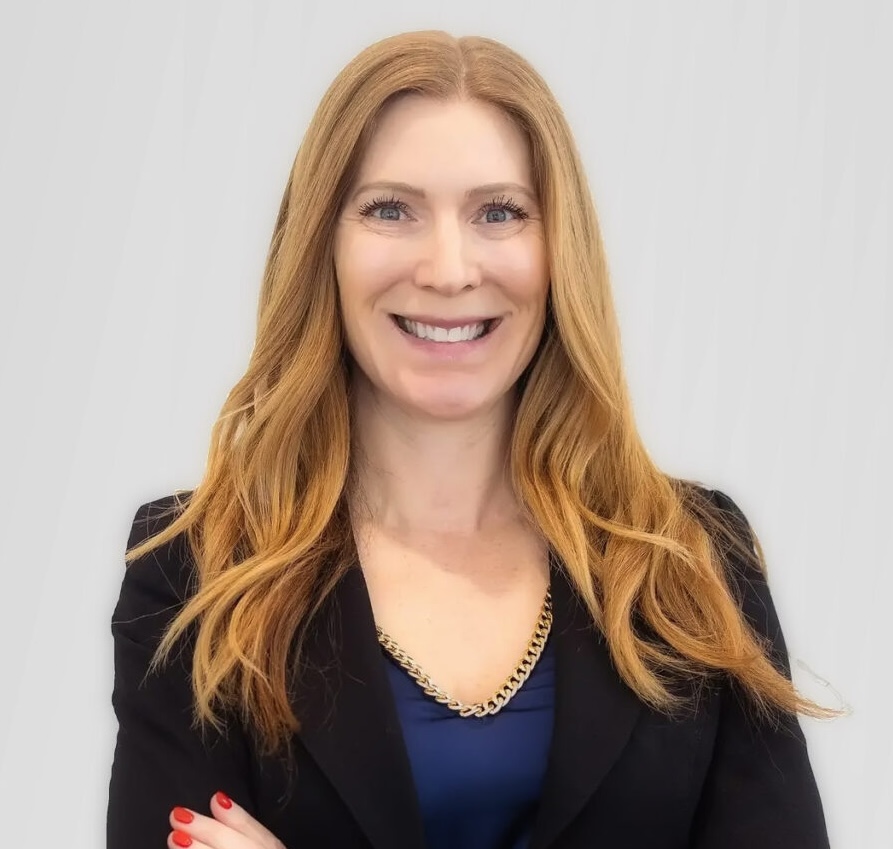
Head of Aesthetic Consulting, Aesthetic Brokers
Jessica Hunter is the Founder & CEO of Hunter Consulting and Head of Consulting at Aesthetic Brokers, where she helps medical aesthetic clinics grow smarter and stronger. She’s partnered with more than 75 clinics across Canada and the U.S., guiding them to boost profits, streamline operations, and build lasting success.
Known for her energy, straightforward approach, and genuine care, Jessica believes the best advice comes from truly understanding each business, especially its financial health and unique challenges.