Thinking of Opening Your Own Med Spa? Ask These Questions First


Thinking about going out on your own in medical aesthetics? Jessica Hunter shares the questions you must answer before starting your own medical spa, like whether you can actually cover your overhead, how long you can float yourself without revenue, and what profit really looks like after rent, payroll, supplies, and credit card fees.
Most new owners assume a $100K month means success, but tight margins often mean you’re barely breaking even. And when it comes to leaving a practice, she stresses that transparency matters, because burned bridges follow you in this industry.
With clear-eyed insight into hidden costs, personal readiness, and what it takes to attract patients from day one, Jessica lays out the real strategy behind building something sustainable—not just something pretty on paper.
HOST
Jessica Hunter
Head of Aesthetic Consulting, Aesthetic Brokers
Jessica Hunter is the Founder & CEO of Hunter Consulting and Head of Consulting at Aesthetic Brokers, where she helps medical aesthetic clinics grow smarter and stronger. She’s partnered with more than 75 clinics across Canada and the U.S., guiding them to boost profits, streamline operations, and build lasting success.
Known for her energy, straightforward approach, and genuine care, Jessica believes the best advice comes from truly understanding each business, especially its financial health and unique challenges.
Follow Jessica on Instagram @hunterconsulting_
Connect with Jessica on LinkedIn
About Aesthetic Appeal
Aesthetic Appeal is where Aesthetic Brokers brings you the latest insights straight from Southern California. We break down what’s happening in the medical aesthetics world—especially when it comes to private equity and transactions with mergers and acquisitions that matter to you as a practice owner.
Learn more about Aesthetic Brokers
Follow Aesthetic Brokers on Instagram @aestheticbrokers
Theme music: Blinding, Cushy
Jessica Hunter (00:09):
Welcome to Aesthetic Appeal. I'm your host, Jessica Hunter, head of Consulting Brokers. Thanks for listening today, I'm joining the podcast to bring you insights from our consulting work. If you're not familiar with our process, we help doctors and med spa owners on the journey to creating both efficient and profitable businesses, regardless if you're looking for an acquisition process or just trying to create a business that is profitable for you to have options for the future. So the question that we're going to answer today is one, for that person who's really pondering or thinking about going out on their own, do they have what it takes and are they able to have their own business or are they just a provider in somebody else's business? So it's really this question of do I have what it takes to launch my own practice and what separates the ones that thrive from the ones that struggle or burnout?
(00:55):
I see this a ton, so I really, really get it and understand what makes someone kind of more successful than someone else. And I think when we think about injectors or providers going out on their own, they're the ones that are saying, Hey, I'm booked up. I have no room in my schedule. I can definitely go out on my own. And the issue with this, or sort of the struggles or the questions that I would ask a little bit is what makes it a good decision to go out on your own, even if you are really busy at your current practice or clinic? And I think there's a few things you need to ask yourself. One is, are you willing to outlast someone else? Are you willing to be there day in, day out and do all of the jobs? Because when you become the owner of the practice, you are no longer the provider who's just clocking in and clocking out.
(01:46):
You are the social media person. You might be the janitor, you might be the receptionist. And so you're going to have to do all of those tasks that you may not be able to afford or have the resources to hire for. That's something that you're going to have to really think about when you're going to go out on your own. I think the other thing that really separates someone from being successful, for someone who might really struggle being out on their own is the ability to ask for support and help when you don't have the answers. The people that really do well are those that are willing to reach out, get guidance, get support where is needed, and just know that they don't have all the answers to all the questions, and they're going to go and get that support from someone else. So I think that's another really important factor.
(02:32):
So when someone comes and tells me that they're ready to go out on their own, the first question I'm going to say to them is, are you in a place where you could have zero revenue coming in and still be able to afford overhead your cogs or whatever supplies you're going to need, potentially staff? Because you have to think is that when you go on your own in your own business, there is no guarantee that you have a lineup of people waiting for you that maybe you had at your old practice. You're really starting from ground zero and you have to make that assumption. And so when I know that someone's ready is when I know that they have a really good strategic plan in place of, okay, not only do I have a really good financial plan laid out that I'm able to know where I'd be able to afford to be here if I didn't have one patient come to see me, but also, what is my plan to get clients to come in and see me?
(03:30):
What does that look like? And I think if you don't even have that sort of plan in place and you're just like, oh, I'm an amazing injector. I have all these clients that love me, I'm going to open up my own thing and they're going to come in. That's just not necessarily the case. What we know too is that typically when someone moves from another location, we are lucky to recoup 60 to 65% of their business within six months. And so I've had lots of scenarios of injectors go out on their own in particular, not that estheticians don't do it, but injectors seem to be the first to move out on their own. And I had a client years ago where their top injector, so someone who does over a hundred thousand dollars consistently in revenue a month, went out on their own and they went to another clinic who I did have the visibility to actually see what she did.
(04:16):
And we're talking someone who's very, very skilled, been doing this, been in the industry for over five, six years, and the very first month she did over 30,000, which is listen for a brand new injector at a new clinic. Fantastic. But is she doing the a hundred thousand dollars that she has done for the last five years? No, of course not. And I'll tell you right now, this was a five minute drive away, so it wasn't even a huge stretch. But I think that's just the reality. You're going to have clients that are going to stay where they are because they're happy there. They have a relationship with the receptionist, the owner, their esthetician, whoever. And it's harder than you think it really is. And so just remember that it's going to take time for you to recoup some of those clients and possibly not all of them.
(04:58):
So when you go out on your own, you have to realize, listen, people aren't going to be happy about this, right? I mean, if you right now are providing services for an owner and you're generating really great revenue for them, so you're really profitable for them and you're doing well, and then you go and you set up shop down the street, yeah, they're not going to be happy with you. And I have a lot of owners that will talk to me about, oh, I don't want to give them too much education. I don't want to give them too much access. Then they can just go open up their own shop. Absolutely, they can, for sure. First of all, it's incredibly hard, but they absolutely can do that. And you can't stop them from doing that. There is no non-compete in the world that is going to hold up from someone being able to provide income for themselves doing what they're skilled to do.
(05:42):
It just will never, ever hold up. It never does hold up. So I mean, when we're kind of thinking about that, how do you do that without pissing everybody off? Well, I think it's actually being transparent. I had a long-term client where we had a massive provider in the business for years, and she planned to go out on her own, and she told my client three years before it actually happened. So there was this long lead up, so we always knew it, but we knew it was far in the future. And the reality is she was a great provider, a phenomenal provider, had a great client list, and just generated a ton of consistent revenue for the business. So it was just something we knew and it was like, okay, great. We actually built that into our forecast and we thought she would leave sooner than she did, but it was three years.
(06:27):
So I think being really transparent that this is my ambition, this is my goal, this is what I want to do for the future. I certainly don't want to cannibalize your business, but just being really upfront about what your own goals are, I think is how you don't really make enemies in the business. So I would definitely suggest that being as transparent as you can be, you guys is key to that. So if you're an owner of a med spa and you want to share or educate with your team what the real costs are associated with running your business, by the way, I think you should all the way up to the point of this is actually our overhead costs. This is what our consumables cost. I actually think that going through that once a quarter or once a year with your staff is so impactful to just share with them, this is how much I spent on marketing this month.
(07:21):
This is how much I actually spend on the consumables. This is what our rent is. And I don't think you have to give actual data points. That's the other thing. It is not like you're telling your staff, Hey, we spent $20,000 on payroll in the month of April. But I think just letting them know, this is a percentage that we pay to payroll. This is the percentage that we pay to overhead. This is the percentage that we pay to marketing. I think that gives a little bit of context of there are all these additional expenses you need to consider that you definitely do not consider as a provider before you're starting your business. And it's just that transparency of what your net profit is, which is what you have leftover after all your expenses, is not exactly the same as the revenue. Because as a provider, that's what they think.
(08:06):
They're like, oh, I did a hundred thousand dollars in sales for this owner, they made a hundred thousand dollars, and of course, that is absolutely not accurate. So I think sharing with your staff a little bit of what your costs are, what the percentage is, and sharing them even, this is our net profit percentage that we take home after everything's said and done, I think can be really valuable. And again, just that transparency I think can be really key. I have to address the question of profit margin in the medical aesthetics industry because I feel like this question has so many variable answers. And the reality is, is that our margins are extremely tight in medical aesthetics. If anybody is telling you that your margin should be above 30%, I don't think they're in the right industry to be totally honest. The reality is, is that our cost of goods and our payroll are extremely high.
(09:00):
I am always aiming to be at 15 to 20% profit margin for my clients. So that would be a really good margin. Now, totally depends on your service mix. If you have more wellness weight loss, you're doing more GLP ones versus injectables, you're actually probably good at that's going to be skewed. You're going to be higher. And I can say that because that's literally how I've seen it. I've seen people have a 40% profit margin who have 80% in wellness and weight loss category versus an injectables or a highly injectable client who does 90% injectables in their business. Yes, it's going to be quite lower because our consumables, our injectables are extremely high. So it really does depend on your service mix of what that looks like. But the reality is, I think people talk about this, which makes me laugh. It's like this endless free flowing cash business.
(09:53):
And the reality is between payroll and cost of goods, you really have to keep those both in check because it is very, very difficult to be extremely profitable in this business. So I think one of the questions you have to ask yourself is, are you wanting to be an entrepreneur? Do you want to actually have your own business? Or are you okay to make a lot of money with a lot of less responsibility? And I think when you ask that question, you really could be like, yeah, I mean, of course I want to make a lot of money with less responsibility. And there are some people that fit that role really, really well. And I think the number one factor that's going to allow you to figure that out for yourself is your personal circumstances. I think there are times and places when being an entrepreneur is fantastic, and I think there's times and places when being an entrepreneur obviously from being one that it's incredibly overwhelming.
(10:52):
And I would sit back and ask yourself, am I at the right time in my life to be able to take this on? Because it will be like having another kid, except it never goes to bed. It really is taking on a thing, a whole new life. And I think you have to kind of ask yourself that because being very productive in somebody else's business, being on a really great compensation plan, making a lot of money, and being able to walk out the door at 5 0 1 and have no responsibilities can absolutely be a great fit for a lot of people in a lot of different circumstances. So I would definitely sit back and then that's the question I would ask yourself, is this the right time for me to be investing in this sort of time and dedication and just grind that is being an entrepreneur.
(11:47):
I think the other key thing to maybe think about, if you're ready to go out on your own and you think you've got everything dialed and you've got a really good plan in place and great resources and help would be what's the long-term goal? Because remember, going out on your own as a solo provider is creating a job for yourself and maybe a great job for yourself, absolutely. But if your goal is to exit your business and sell your business down the road in this industry, you're going to have to create a whole team around that is going to be able to produce so that it's not you as a solo producer because that isn't an acquirable business. So it's also just sort of asking yourself, what am I looking for long-term? Is this the right fit? And that's going to guide you to where it would be.
(12:35):
And it's not to say going on your own and you being the main provider up until a certain point isn't a great way to create a business. It's just that that's not going to be the long-term vision. If you're looking to exit, you're going to have to strategize and create a business that is based on multiple providers generating revenue, not just you. So if you're looking for help on growing and expanding your business, being able to really create a business that's sellable or ready to maybe actually go ahead and make a transaction and sell your business today, then reach out to us at Aesthetic Brokers. We can lead you down that path of what's the best route for you, your family, for your goals. So you can reach out via email at any time, and we'll get back to you and talk a little bit more about what your plans are.
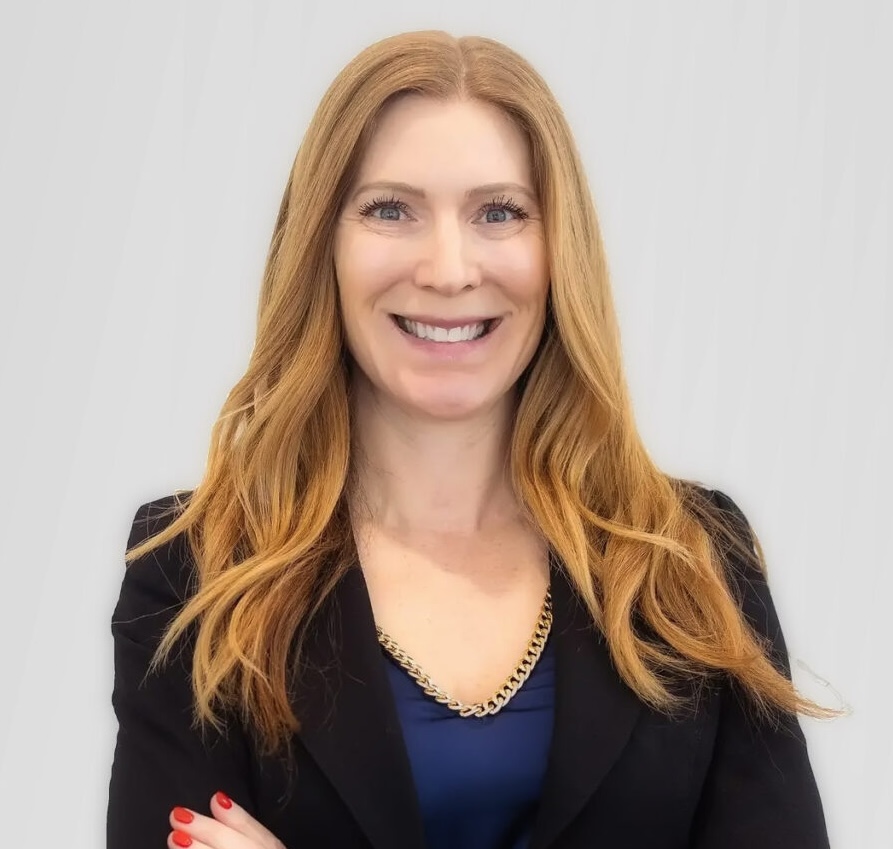
Head of Aesthetic Consulting, Aesthetic Brokers
Jessica Hunter is the Founder & CEO of Hunter Consulting and Head of Consulting at Aesthetic Brokers, where she helps medical aesthetic clinics grow smarter and stronger. She’s partnered with more than 75 clinics across Canada and the U.S., guiding them to boost profits, streamline operations, and build lasting success.
Known for her energy, straightforward approach, and genuine care, Jessica believes the best advice comes from truly understanding each business, especially its financial health and unique challenges.