The Real Reason You’re Always Behind



If you constantly feel behind in your business, it’s probably not because you’re lazy. It’s because you’re doing too much of the wrong stuff. Jessica Hunter explains why time is the most overlooked asset in aesthetic practices, and why working harder almost never fixes the real problem.
Understanding where your time actually goes, getting comfortable with delegation, and knowing your numbers can completely change how your business grows. Listen for why perfectionism quietly keeps owners stuck, how patient experience impacts far more than reviews, and why letting go of control is often the turning point.
The emotional side of being a business owner is where burnout can creep in fast. From small daily shifts that compound over time to knowing when to ask for help, Jessica shares how to build a business that works for you, not one that drains you.
HOST
Jessica Hunter
Head of Aesthetic Consulting, Aesthetic Brokers
Jessica Hunter is the Founder & CEO of Hunter Consulting and Head of Consulting at Aesthetic Brokers, where she helps medical aesthetic clinics grow smarter and stronger. She’s partnered with more than 75 clinics across Canada and the U.S., guiding them to boost profits, streamline operations, and build lasting success.
Known for her energy, straightforward approach, and genuine care, Jessica believes the best advice comes from truly understanding each business, especially its financial health and unique challenges.
Follow Jessica on Instagram @hunterconsulting_
Connect with Jessica on LinkedIn
About Aesthetic Appeal
Aesthetic Appeal is where Aesthetic Brokers brings you the latest insights straight from Southern California. We break down what’s happening in the medical aesthetics world—especially when it comes to private equity and transactions with mergers and acquisitions that matter to you as a practice owner.
Learn more about Aesthetic Brokers
Follow Aesthetic Brokers on Instagram @aestheticbrokers
Theme music: Blinding, Cushy
Jessica Hunter (00:09):
Welcome to Aesthetic Appeal. I'm your host, Jessica Hunter, head of consulting for Aesthetic Brokers. Thanks for listening today. If you're a business within a business or you're the business owner of a med spa, there are two things that I want you to think about when it comes to how you're allocating your time. So where's your time actually being spent? I think it's such a huge question and sometimes we get lost in it because we actually don't know. But most of the time we're just spending time on things that we don't necessarily need to be doing, that we could allocate or resource out to other people. I always want to think about my time and my client's time as the most valuable asset. And so if it is the most valuable asset, then the things that you know somebody else can do and/or you can teach and train, they should be doing.
(01:00):
That's the first question you always want to ask yourself when you're doing a task and you're like, "This is taking me too long. I don't really enjoy this. I don't want to be doing this. Okay, can I train or teach this task to someone else?" That's really going to help you to sort of allocate 90% of the tasks other people that can do to someone else and free up your time for only the things that you can do. If you're a provider and owner in the business, this can be really difficult. And so you have to think about optimizing and being as efficient as possible so that you can see clients, do what you need to do and run your business. And so to be able to do that effectively, you really have to delegate all of the other tasks somewhere else because there's no way you're going to be able to also do your social media.
(01:42):
Also be able to talk to your reps, manage inventory, order new products. You're just not going to be everywhere. And so you have to really think about what is the task I can do and what is the task someone else can do? It's the same old saying that we always hear, "You need time to be obviously working on the business, not in the business." And again, that's a lot easier when you're not from a service-based business where you might be the main provider in the business. And so take that aside because you're going to have to provide services to clients if you're in that role. But there is a ton of other tasks that when you take that off, it really opens up that space and just even mindframe and space in your mind to just think about, where do I want to go and how do I want to get there?
(02:23):
And then you can really have some direction for your business. There's two things that I get asked for a lot from providers when we sit down, do a staff review. The first is, of course, we're talking about compensation. So usually somehow compensation comes into it, but the second is an odd one and it comes up as asking for an assistant or help in their treatment room. And the question that I would always ask is, of course, why? Because if you are really productive as a provider, yes, you may need some help, but at a certain, that's a tipping point. So if you're at 80 to 85% utilization, so we're just looking at our hours that are scheduled versus our hours that are booked for services, that's it. You're for sure to be more productive in the set time that you're there probably would need an assistant to help do other things, charting, preparing products, numbing, letting clients in and out of your room or walking them back, doing the transaction.
(03:24):
There's a bunch of things that you could be offloading so that you could be just as efficient to do what you want to do, but until you're at a capacity, even close to 80, you should be able to do all of those tasks. So I don't know if that's the right answer, but it's definitely when I think about how and when do you need to delegate and allocate for a provider's sake, it's not really until they reach that certain sticking point, because other than that, I think that they definitely have enough time to be able to do all the other things to their capabilities. First and foremost, for most of the owners in the med spa world that I work with, understanding their financials and their financial landscape is not something they love. It is not something that they want to do, and it's usually not their skillset.
(04:09):
I would say 99.9% of the time. So that is totally okay. The issue more is, well, how do we know how the business is doing, where we're generating revenue, what's profitable, what's working for us, and/or where we want to focus our time and attention. So the very first thing I think you should delegate out is not necessarily to a bookkeeper and accountant. Those are sort of standard things as you grow your practice you'll need just for operational sake, but it's definitely someone as a financial consultant that could come in and assess your business, really understand what's happening and help you build a plan to grow for your long-term goals. That's like the number one investment. And I think having someone like that to give you that clarity is going to free up so much time and energy, not just the minutiae of going through a spreadsheet and understanding it, but just to give you that clarity of like, "We're going to focus on these three things in 2026.
(05:02):
This is how we're going to grow. To do that, we're going to need two more providers. What are they going to focus on? What are their goals? How are we going to pay them?" Just to actually tell you exactly what to do based on what you want will free up more time than hiring a social media manager, than hiring a marketer. All those things I think you should delegate, by the way. But I think when we're talking about ways that double or triple or quadruple, your time will be things like that that can give you that strategic direction and where to go. One of the things that I'm loving seeing kind of like in mainstream media right now is this sort of talk with women especially is like, you can't do it all. And there is no such thing as like a work-life balance. I actually love this idea because it's such a reality for most women that have their own businesses, have a family, also probably have a husband and have other responsibilities.
(05:58):
And this amount of pressure on women to think that you actually have to be perfect at all of these things, plus be in the most amazing shape ever, never look like you aged today, have a great social group of friends. It's so unreasonable. And I think one of my things I've at least realized for myself and having my own business and having two kids is I'm always going to be lacking somewhere when I'm great somewhere else. And I've actually been okay with that. It's this idea of like when I'm at work, I'm trying to be 100% focused into work and when I'm with my kids, I'm trying to be 100% involved in watching their sporting events or like playing video games with them or whatever it is and not get distracted by something else. And so I'm trying to take these bite chunk size of time or periods of time where I'm like, okay, I'm just focused on this and yeah, I'm going to miss some emails and yeah, I'm going to miss some phone calls, but I'm trying to just say, Okay, I'm going to be great at this and I know something else will suffer and be okay with that.
(07:01):
I had this conversation with a social media manager for one of my clients and she was saying how difficult it was to work with the client. And it came back to kind of talking about expectations. But one of the things that kind of came out of it was it's not, is she the right client? Have you let her know that you're doing her social media? So it's not going to feel like her. It's not going to be exactly how she would write it. It might not be the exact stock image or the right exact angle of the real that she would like. And she has to be okay with that because she's now delegated off to you. And I think that's the conversation right there of being like, am I okay with it not being exactly how I would do it or exactly how maybe I would express it or whatever it is.
(07:48):
And if you're like, "Yeah, okay, I am okay with it. " If you're not, then you probably still cannot delegate that task because all you'll end up doing is micromanaging the person to death and it's not going to get off your plate anyways. So I think if you ask yourself that like, "Am I okay with someone maybe not doing this exactly how I'd want it, but it's 80% of the way?" I think that's a definite time to take off those tasks. And I think as your business grows, you become more and more comfortable with that because you realize that some of these smaller things actually don't matter because the things that really matter for your time and attention is the growth of the business, where I want to go and sort of managing your team to get there. And you realize that sort of top level management leadership far outseeds micromanaging a receptionist on how many callbacks she's doing or micromanaging your social media manager.
(08:37):
It's really where you add value. Why isn't working harder the solution? Well, I mean, I think for the obvious reason that it's working harder on what? What are we doing that's actually into the direction of where we want to go for the future? If you don't know how what you're doing today is get a compounding effect to get you further down the road, then how do we know that we're working harder, I guess would be my question. And so what are we working harder on? And I say this to a lot of providers when we're talking about them just getting started and they're like, "Oh, I don't know what to do. I don't know how to get new clients. I don't know how to get new patients, the whole thing." And it's like, do something every day that's going to move the needle forward for you.
(09:21):
And so if that's calling five patients every single day and letting them know about a service that you offer, if it's following up with five every day, like whatever it is, but that compounding effect will grow. And if you just focus on what you're doing right now, you don't even have to think about the future. So if you're just focusing on these tasks that you know that will grow over time, then that will just happen and it'll be more about the journey versus like the end result. And that's sort of that idea of like, how do we work harder? Well, we're working every day towards the one kind of end goal, but every day we know that we're doing something to get us there, very similar to like somebody who is trying to lose weight. We're not like on a scale every day because we're probably not going to see anything, but we know that we're working on every day, we're eating well every day, and that will compound over time too, be healthier, lose weight, all the things.
(10:16):
To me, it's like that same sort of, I guess, similarities that you can kind of compare, right? So you're not going to see the results today, but as you do them more and more and more, you're going to realize that those small things all add up over time. So if you're listening today and you feel like you are overwhelmed or bogged down by a ton of tasks that you don't think that you need to be doing or you're not really sure how to outsource and get the resources to, then reach out today at Aesthetic Brokers and I definitely will be able to help you determine what tasks you should be doing, what tasks that you don't need to be doing and kind of earn back or gain back that time for you. And so you can find us at aestheticbrokers.com or you can go to hunterconsultingservice.com and read about a little bit more about what we do.
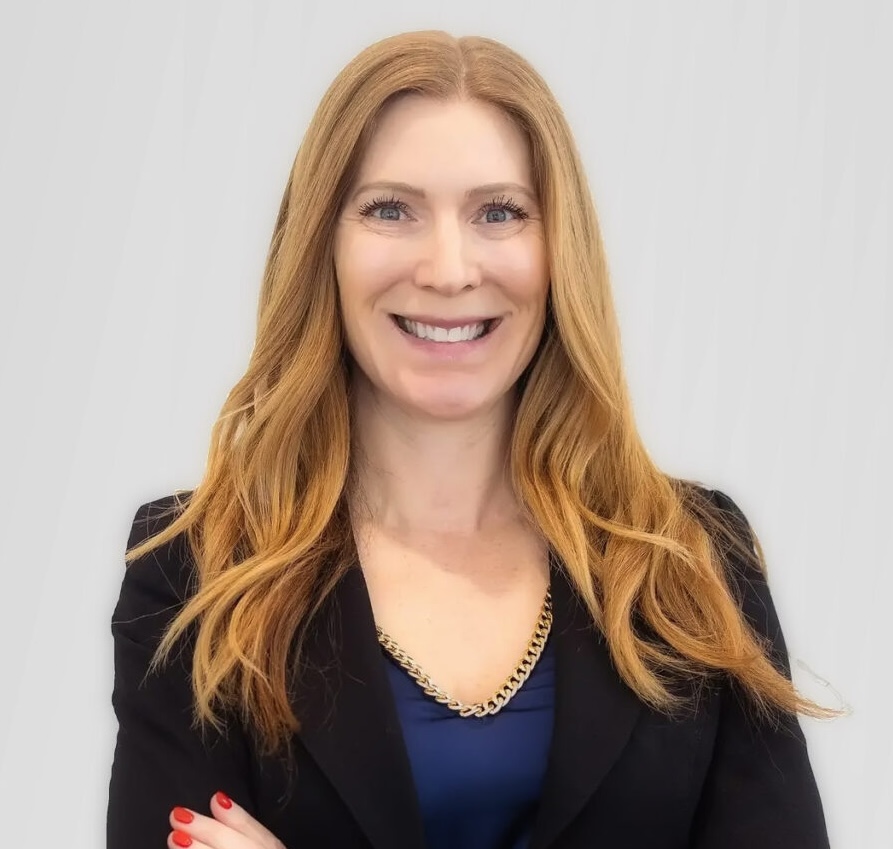
Head of Aesthetic Consulting, Aesthetic Brokers
Jessica Hunter is the Founder & CEO of Hunter Consulting and Head of Consulting at Aesthetic Brokers, where she helps medical aesthetic clinics grow smarter and stronger. She’s partnered with more than 75 clinics across Canada and the U.S., guiding them to boost profits, streamline operations, and build lasting success.
Known for her energy, straightforward approach, and genuine care, Jessica believes the best advice comes from truly understanding each business, especially its financial health and unique challenges.