The Hard Reality of Owning a Million-Dollar Aesthetic Practice



Seven figures sounds glamorous until you’re the one signing the checks. Jessica Hunter is back to explain why a “million-dollar” med spa often isn’t profitable at all, and what owners should prioritize once the revenue starts rolling in.
She uncovers where money really goes in an aesthetic practice, what healthy margins look like, and why most first-time owners misunderstand the difference between owner pay and business profit.
Find out the real reasons aesthetic practices plateau and how to decide whether your next investment should be hiring, automation, or upgrading your EMR.
And if you’re finally seeing consistent cash flow, that’s when the real work begins. Listen for her take on when to bring in financial help, how to reinvest $25-50K the smart way, and the pivotal moment every owner has to reinvent their role to keep scaling.
HOST
Jessica Hunter
Head of Aesthetic Consulting, Aesthetic Brokers
Jessica Hunter is the Founder & CEO of Hunter Consulting and Head of Consulting at Aesthetic Brokers, where she helps medical aesthetic clinics grow smarter and stronger. She’s partnered with more than 75 clinics across Canada and the U.S., guiding them to boost profits, streamline operations, and build lasting success.
Known for her energy, straightforward approach, and genuine care, Jessica believes the best advice comes from truly understanding each business, especially its financial health and unique challenges.
Follow Jessica on Instagram @hunterconsulting_
Connect with Jessica on LinkedIn
About Aesthetic Appeal
Aesthetic Appeal is where Aesthetic Brokers brings you the latest insights straight from Southern California. We break down what’s happening in the medical aesthetics world—especially when it comes to private equity and transactions with mergers and acquisitions that matter to you as a practice owner.
Learn more about Aesthetic Brokers
Follow Aesthetic Brokers on Instagram @aestheticbrokers
Theme music: Blinding, Cushy
Jessica Hunter (00:09):
Welcome to Aesthetic Appeal. I'm your host, Jessica Hunter, head of consulting at Aesthetic Brokers. Thanks for listening today. I'm joining the podcast to bring you insights from our consulting work. If you're not familiar with our process, we help doctors, med spa owners on the journey to creating an efficient and profitable business. So today we're talking about the idea that you've now made it, your business is growing, but you're not really sure what to sort of prioritize to grow and scale first. And I think this is a big issue because people assume a million dollar practice means a million dollar lifestyle. It means that you're just rolling in money. But what we know is that a million dollars is really actually not that big in the med spa industry. And it's not the realistic take home, obviously, for the owner or owners in the business. And so at what revenue number does cashflow really feel stable for success?
(01:03):
And that's a really hard question to answer because the reality is it's really all about not just the revenue, but how profitable we are for the services that we offer and the people providing it. So let's imagine that we've hit the point that revenues are steady. Patients are coming in, the numbers look good on paper, but now what? Why do we still feel like we're drowning, we can't catch up every day, that we're just really overwhelmed? And I think the very first thing you have to do is take a step back from your business and take a look at what are your real bottlenecks or constraints in your business that aren't allowing you to grow and expand. And when you do that, there's a couple things that are going to hit you probably pretty quickly. And the first might be personnel. You don't have enough of the right people in the right roles to do the right jobs that's needed to grow and scale.
(01:54):
And that's so easy to sort of miss because as you're growing, people start taking on multiple different roles from one position. So you have your receptionist, she's also doing your social media and she's doing your website marketing. And so here we have somebody who is supposed to be dedicated to patient experiences, converting new patients bookings, doing retention strategies, really implementing that whole process, which is so key, but she's also supposed to do your Instagram posts and she's supposed to update your website on all your new services. And so you realize that, oh my goodness, maybe we actually need someone who can just manage our marketing. Maybe that's an actual constraint for us. The other one is, as yourself, as the owner, you might be the main provider in the business generating revenue, but who is actually doing payroll every two weeks, who is reviewing the business financials, who is understanding what your cost of goods are, making sure that you are actually ordering and doing your supplies, who is doing all of those things.
(02:55):
And so that could also be an issue that comes up like, Okay, I need an accountant. I need them to manage my QuickBooks. I need someone who's going to keep me accountable to what my financial goals are and targets. Maybe I need to start working with someone who's a financial consultant to help me understand my business, understand where I'm losing money. And so those are the kinds of things that you kind of have to see like, where's the bandwidth that? You might be doing all these multiple roles really poorly. And so that's the number one issue. There's no question. In a service provider business, one of our number one bottlenecks definitely is personnel. And it's a hard one because you got to have the cash flow to be able to sort of validate that you can hire another body. But I think what happens for the most of us is we far exceeded that and the revenue's coming in, but we just don't actually have the bodies to be able to deliver that service.
(03:47):
And that's when we can really see our business take a hit. And so my recommendation to you is to identify what the actual constraint is, what we really need to do, and then we're going to plug somebody in who is just particular to that role or that function that we really need. So a real example that I have with some clients I've worked with, because there's a few that have this exact same scenario, is the owner is the main provider in the business. They're generating 80, 85% of the revenue. And because they're so busy seeing patients day in and day out, they weren't able to do the things that they used to do within their patient follow-up and retention. And it caused a lot of issues because they didn't have a system in place that allowed them to kind of automate some of the things that they couldn't do.
(04:33):
And so one of the constraints right away that we saw was more on the operational side of, do we have a system that's going to allow that communication, the confirmation, the follow-up, and allow that to flow as automated as possible so that the provider can continue to do what they're doing, maximize their schedule, understand that their schedule is going to be full. And that was something they didn't even think about, but it was falling through the cracks where people would be showing up late or not showing up at all, not realize they have to come in for numbing. And it was causing them to be completely backed up in the patient experience, obviously, to be suffering. And so although the bottleneck for sure as this provider is at capacity, we just didn't have the operational systems in place to allow them to be as productive as possible.
(05:20):
So when we talk about bottlenecks or constraints in a business, I would say 99% of the time when I start working with the client, we are definitely identifying one of them to be in their operational process. And what that usually means is that they don't have a system within their business that they can actually use. So they don't have an EMR that's an all- in-one tool that can do their marketing, have their patient files, do their automated, do their patient communication, and it allows it to be more of an implemented system that takes it off their hands. As much as can be automated as possible is what you want. And I think people in this business are like, "Oh no, I need to talk to my clients." Yes, you will always talk to your clients. Trust me, they will always call you if they have an issue or if they're bruised or they're swollen, you will hear from them.
(06:08):
It's not about that, but it's about automating some of those things that you don't need to be interacting with them every single minute, every single day. And by doing that, you've got to look at a great EMR tool that you can do to implement. And we do that all the time for our clients. I would say it's like I said, it's almost like part of just starting with us is, Hey, let's take a look at this. Do we have some constraints here as you're trying to grow and scale?" Absolutely. How do we address them? Nine times out of 10, it's the technology you're using. You don't have something that's allowing you to grow with the growth of your business. So if you're a solo provider that's going out on your own and you're asking my opinion and my advice on what you should maybe do for an EMR platform or software solution, do I really need to get something that has all the bells and whistles?
(06:58):
It's just me, I will actually advise you to go with something you can grow into. I have seen providers that start on a platform that they all grow so quickly as soon as you have another provider, multiple services. It's just if you want to do virtual consultations, there's so many things that these sort of solo EMRs just don't allow you to do and you will outgrow it so quickly. And it is more of a pain in the butt to change. I promise you that to just start where you are and sort of adapt it and continue to add on features as you need it. So I would highly suggest you start with something that you feel like you can grow into as your business grows. And that's just my point of view if you're starting out on your own. So I think if you're really trying to identify what your constraint is in the business, like what's really stopping you from growing?
(07:50):
The question I love to ask is, if we had a hundred people walk through your door today, would you be able to serve them? And if your answer is, "Well, yeah, we have people, they just don't have any patients, we could see them." Okay, great. So we actually have personnel, we have capacity to see them. If you said to me like, "No, there's no way. I mean, we just don't have that kind of time. I only work two days a week and we have a part-time provider," whatever the case is. Okay, so that's going to ask me like, "Do our providers need to work more? Do they need to have more availability? Do we need to hire people because we don't have enough availability currently with our current providers?" And then the second question, sort of the follow-up question is, do we have systems in place that you would feel comfortable or confident that we could get out everybody's information, we'd be able to communicate with these brand new clients, we'd be able to input them, use them as leads, be able to target market them on other things they'd be interested in.
(08:49):
And if they're like looking at me like I'm crazy, that's for sure a sign of like, "Okay, we probably don't have the infrastructure. We don't have the technology that is going to allow you to quickly take on new clients, new leads, new patient acquisition, and to be able to dump them into a software that's going to allow us to be able to utilize and market to them and keep their information and do before and after photos and do treatment planning, because if that already sounds overwhelming to you, you probably don't have the right tools in place to be able to help you do that in a really easy, streamlined, systematic way." And so that kind of allows us to answer those two questions right off the bat. I would encourage you to always ask yourself like that question. Even like when we're talking about marketing, which is another thing is, do I need to do more marketing?
(09:36):
Well, I don't know if I got you 50 people tomorrow, what would happen? What would we do with them? And so why are we talking about marketing? If I got you 50 people at $10 a unit on our discount promotion and they all came in for $10 a unit, are we even able to sell them to our actual real ticket item? Do we have the person who can do that? And this happened this morning to me with a client where she came and was like, "I had another call with the marketing firm. They sound really great." And I just said to her, I said, "But let's take a look because this month alone, we just looked up to see how many leads she had. She had 14 new clients for this one lead that we're doing for a HydraFacial and then we take a look at like how many did we do the upsell because our upsell is a three pack deluxe facial, blah, blah." She had one upsell and it's like, "Okay, so is our constraint really the amount of leads you're getting because you're almost getting a new client for this treatment every single day that you're open or is the constraint actually the person who's doing them because it's a discounted offer with this opportunity to sell up into our actual offer to retain them, right, keep them as loyal clients for long-term reoccurring services." And so she was like, "Oh wow, I guess so and so I won't say her name, so- and-so isn't able to sell." Yeah, so- and-so isn't doing a great job.
(10:57):
So let's go back to the drawing board, let's make sure she knows exactly what her role is to do, what are the add-ons, what is she's upselling, what's the downsell, and make sure she has the tools and resources and information to be successful because that's your problem. Your problem is not the marketing, right? So it's sort of just asking yourself those questions and they'll lead you down that path of what you really need to be focused on. One of the difficult questions as an owner to answer is when you start seeing that you're making money every month and that you actually have a profit leftover, it's that kind of question of where am I reinvesting it? What is a good decision? Is it a new laser device? Is it a new software system? Is it to expand the location? It's actually probably the hardest question to answer is, what do I do when I start making money?
(11:51):
What do I do with that money? If you're really struggling to understand what to do with your profit each month, that might be a sign that you're ready to partner with somebody who has a really good understanding of the market, the industry, and the financial landscape. That might be a time where you're kind of wanting to create that relationship and start learning about the business because having someone who can be in a CFO role for you, an advisory role for you can be really helpful to kind of see outside of your four walls, right? To kind of get you out of the business and allow you to just think about asking you some of those really tailored questions, right? What's the long-term vision? What's the long-term goal? Because I ask my client that every single day, every single day, because it changes by the way, but it also just redirects where our focus and time and attention are, or it just redefines exactly everything, every tactic that we're doing every single day.
(12:56):
So that might be a good time to think about it, like do I have the right people in my corner advising me on what to do next? So I'm not listening to the laser reps that just walk in every day, not that they're not great people, but that I'm making really strategic decisions that are aligned with my goals. So success like this is probably also a sign that it's time to sort of reinvent your role that you're currently doing. I always say that 18 months is sort of that sweet spot where you know enough to know what you did wrong and you know enough to know what you don't know. It's like this interesting crux, I think, of just starting a business, right? It's like you've tried something, some things have failed, and then you've kind of realized like, Okay, this is where I actually want to go or this is actually what I want.
(13:43):
And as an owner, you're constantly sort of reinventing what that role looks like. And I love this idea of a clinic manager role to take on from the owner, like a role where they can literally take on the operations of the business for you. And as they grow, they might start out as an operational manager and then as they evolve, we're trying to get them into a business manager. And that's sort of the evolution I think as you grow that you're trying to sort of look to of how do I remove myself as being the key person that has all the answers and educate someone else to be that key role for me. So if these sound like challenges for you right now in your business, we are absolutely here to help. We address these issues all day, every day. So reach out, you can find us on aestheticbrokers.com.
(14:33):
We're here to help you guys with these problems.
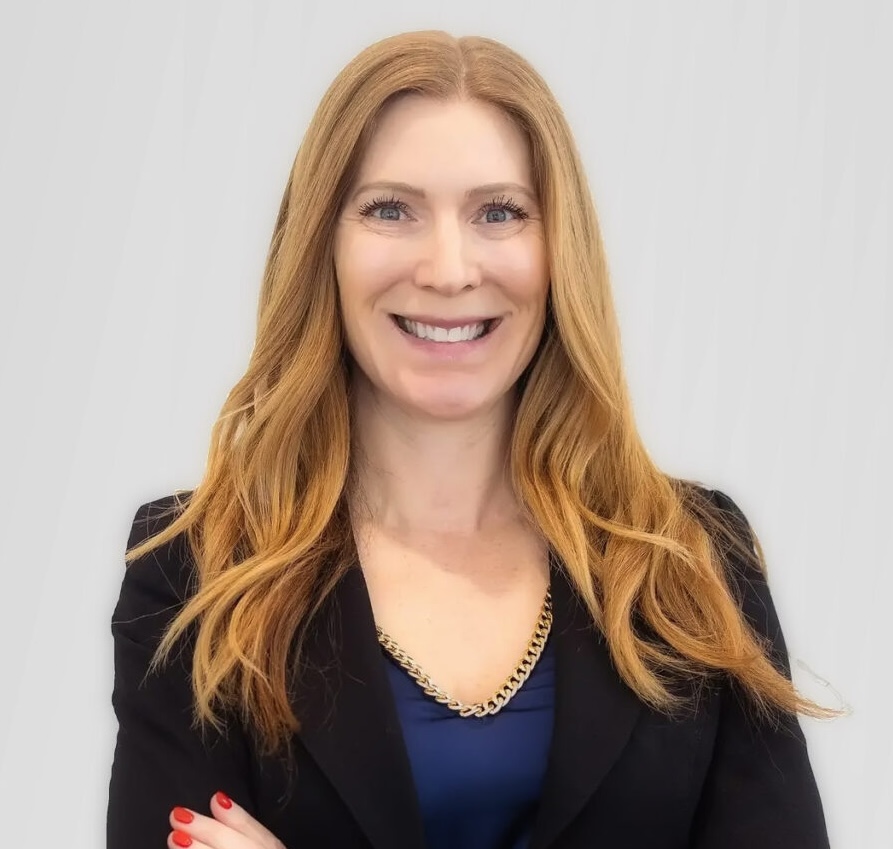
Head of Aesthetic Consulting, Aesthetic Brokers
Jessica Hunter is the Founder & CEO of Hunter Consulting and Head of Consulting at Aesthetic Brokers, where she helps medical aesthetic clinics grow smarter and stronger. She’s partnered with more than 75 clinics across Canada and the U.S., guiding them to boost profits, streamline operations, and build lasting success.
Known for her energy, straightforward approach, and genuine care, Jessica believes the best advice comes from truly understanding each business, especially its financial health and unique challenges.