How and When to Confidently Raise Your Prices


Pricing tends to get set once and then forgotten, even as demand, costs, and services evolve. Jessica Hunter shares why regularly reviewing pricing keeps aesthetic practices healthy and aligned.
She explains when high-demand services support higher prices, how tiered offerings shape perceived value, and why consistency across providers matters.
Listen for how data can guide smarter pricing decisions, how memberships encourage long-term loyalty, and what teams need to confidently communicate pricing with clients.
Instead of chasing what the med spa down the street charges, learn how to build loyalty with clients who are willing to pay for outcomes, quality, and trust.
HOST
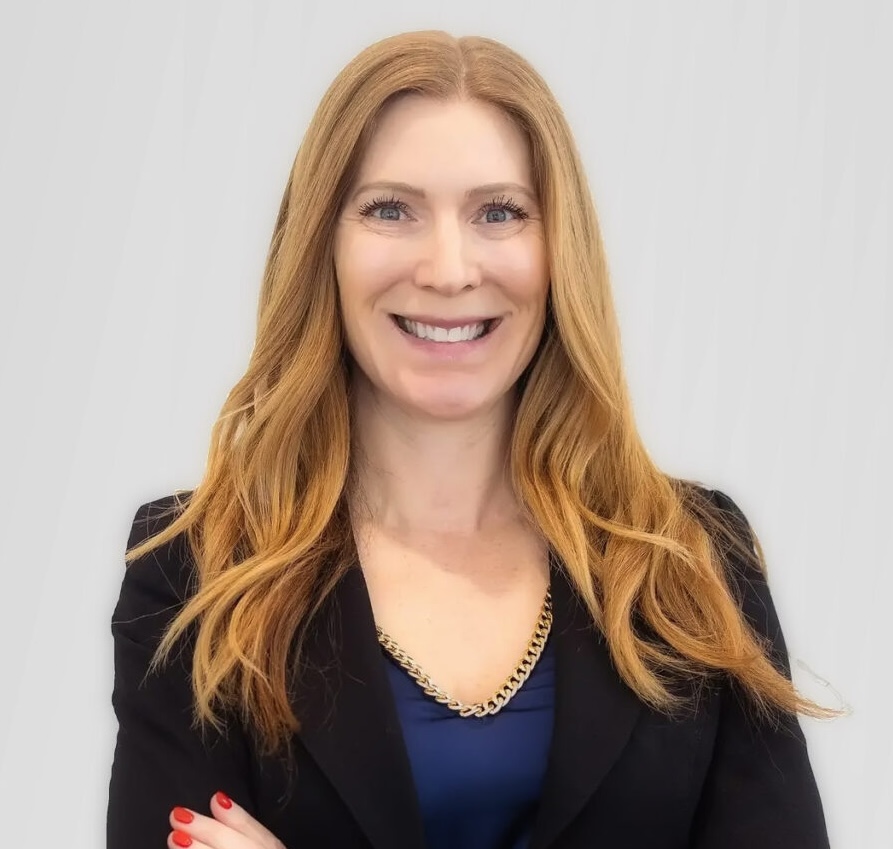
Jessica Hunter
Head of Aesthetic Consulting, Aesthetic Brokers
Jessica Hunter is the Founder & CEO of Hunter Consulting and Head of Consulting at Aesthetic Brokers, where she helps medical aesthetic clinics grow smarter and stronger. She’s partnered with more than 75 clinics across Canada and the U.S., guiding them to boost profits, streamline operations, and build lasting success.
Known for her energy, straightforward approach, and genuine care, Jessica believes the best advice comes from truly understanding each business, especially its financial health and unique challenges.
Follow Jessica on Instagram @hunterconsulting_
Connect with Jessica on LinkedIn
About Aesthetic Appeal
Aesthetic Appeal is where Aesthetic Brokers brings you the latest insights straight from Southern California. We break down what’s happening in the medical aesthetics world—especially when it comes to private equity and transactions with mergers and acquisitions that matter to you as a practice owner.
Learn more about Aesthetic Brokers
Follow Aesthetic Brokers on Instagram @aestheticbrokers
Theme music: Blinding, Cushy
Jessica Hunter (00:09):
Welcome to Aesthetic Appeal. I'm your host, Jessica Hunter, head of Consulting for Aesthetic Brokers. Thanks so much for listening today. Today pricing is on my mind, so let's talk more about it. When it comes to pricing, I always like to reassess all my clients' pricing. So the very first thing is we take a look at their current services, they're offering their packages and any reoccurring revenue streams like their membership, and then we're going to assess all their consumables, their overhead costs, how much they pay for the staff, the allocated time of the service, and of course the price that they're offering. And what usually this leads us to is down a road of are we pricing things effective in terms of how much of that service we're offering, how much we're paying for the provider to do the service, all of those things. And a lot of times this is a really great way to strategically understand your pricing.
(01:02):
When you have really high demand for a service, meaning you have no availability, everybody kind of wants to come in for that particular service. Maybe you only have one provider who does it, we have the opportunity to of course increase the price for it. So we don't need to have discounts or promotions on something like that because we already have the demand of people wanting to do the service. That's a really easy leverage in terms of increasing the price per unit of that service. Now the second piece to this is we always want to funnel those clients to the service that we want to provide. So for example, if we're talking about laser treatments and we offer a laser full face treatment and we offer a laser full face and neck, and then we offer a full face, neck and chest. So really calm, and I see this all the time for a lot of different laser services we would offer.
(01:58):
Now we know that offering laser full face, neck and chest is going to be the best value in terms of what we're able to price more because they're getting more value, they're getting additional body parts. And the allocated time that we add on neck and chest isn't that significant. It might be, depending on the treatment, it's 10 to 20 minutes. It's not a lot. And we get someone in for more money, more value in a very small amount, increased amount of time. However, instead of just thinking that we're going to increase everything for full face, chest, and neck, I want us to take a look and be like, okay, most of our clients actually do full face and neck. That becomes our lead service that we're offering in that category. And so we want to price that so that it's our very first offering full face and neck.
(02:45):
Let's say for round numbers it's $500. Our full face would be our down sell. So let's say we're going to do that at four 50. So that jump is so small to full face to full face and neck. And so it's a really easy starting place for us to say, oh, we offer full face and neck. It's $500. If you just wanted full face, it would be four 50. And they're like, well, I mean it's for another $50. Why wouldn't I do my face and neck? Which is for optimal outcomes, let's say what we suggest now if they want to do the chest, we just add that on and it's an add-on price to our full face and neck already. And so that allows people to kind of add it on when they need be. They may not do the chest all the time, and it allows it to increase instead of having it as a standalone sort of service.
(03:32):
But this strategy of what we're increasing in why really stems from what you are trying to promote as the best possible outcome to your patient. It's not that you need to increase every single service. You always want to increase your services that have high demand. That's an easy one. We know how to do that. And then you want to strategize that you're going to have services as your first offering to be the best value. And so that's going to be in the shortest amount of time where we can price it more. And then you're going to have downsell option one and downsell option two, so that you always know. And the last piece to this is that you have to make sure that this is really well communicated within your clinic and your providers so they know exactly what that pathway is every single time they see a patient come through.
(04:22):
So when we're talking about pricing strategy as it relates to injectables, I think this is so impactful and people maybe don't think about this a lot. So remembering that when we're talking about neurotoxin, for example, the difference between doing 20 units and 40 units can be the difference between being profitable for a service and not profitable. Most of the times it's depending on the product we're using and how much we're paying our team. But in a general sense, typically we usually see profitability between 30 and 40 units, which means why would we want anybody coming in for 20 units? So think about that when you're pricing, do we have a different price for 40 units and up versus 40 units and down? Because think about this, we are trying to obviously deliver optimal outcomes, great results for our patients. And by the way, we know that under 40 units above the age of 30 probably isn't going to suffice and do that.
(05:15):
And so we're trying to do twofolds. One, we're trying to move the needle in terms of the amount of revenue that we're going to generate for the same amount of time that it takes the provider to do the service. And then two, we're trying to also kind of lead them towards that optimal outcome for the best result. And so you're trying to be strategic with your pricing to lead that. It's the exact same when we talked about biostimulators or dermal fillers. We know that if we have an experienced provider who can do two syringes in the same amount of one, obviously that is our pricing strategy to be able to try to do that. If you have someone who's really experienced and they feel really comfortable doing three or four in let's say a 60 minute timeframe, then we want them to be able to have that opportunity to be able to do that many versus one syringe in that same timeframe because we're paying that provider within that timeframe and we're seeing that client within that timeframe.
(06:09):
And so this is where your utilization and your optimization really come in when you start thinking about how am I pricing things effectively to move the needle to be able to do more in the same amount of time? And like I said, it's starting with the most value. If we take a look at our data and we already know that we average 2.5 syringes for every patient, let's just say we take a look at 2025, that's what we average. Okay, great. So our pricing structure is going to start there. We are going to say for every two syringes, this is where our best value comes. It's a small upgrade from one syringe, for example, so it's the best value, and then they can go to three or four additionally. So there's always the upsell and then there's that downsell. But we start at where we know our average sits.
(06:55):
So it's a really comfortable place for a client to kind of get to without us feeling like it's an unrealistic expectation or we don't have the demographic for it to support it. We're using our own data to create that strategy. And those small increases by $50 by a hundred dollars, every single patient transaction is really what moves the needle for you in terms of your revenue. It's not these giant increasing package sales that you do a couple times a month. It's the single reoccurring transactions that we are increasing slightly and just have small increases and doing repetitive businesses that is going to generate you more consistent revenue day after day. I think if you are starting from a place where you know that your price points are too low, so we take a look at all your prices and we're like, wow, everything here is too low.
(07:49):
And the number one thing you're going to say to me is, oh, my patients, my clients, they can't spend more than that. They can't afford more than that. And it doesn't matter what town, what city, what state you're in, you guys are going to say the same thing to me, but we haven't even given it a chance. We haven't even given that opportunity because we've just made that assumption that that is what our patients or clients are comfortable spending because that's how we've priced it. So it all stems from how we credential ourselves, how we credential the value of the treatment. And it's not about how beautiful our branding is. It's not about how awesome our social media is. It's about how someone feels like they're getting the best treatment, the best service for the most value, and that we need to portray that. And so that's why it's really great to be strategic about your pricing.
(08:41):
Instead of saying, we're just going to increase everything. Well, no, let's increase the services that we know we have more demand for. We know that people are already wanting, we know they're already building credibility for a new clinic. So we're always trying to look at increasing those first, and we're increasing the services that we know that people are going to want. And that's an easier way to look at it than just a full across the board increase everything, because if you have no demand for, I dunno, cabela right now, there's no point in increasing the price. We don't care. We have no demand for it, nobody wants it, and maybe it's something you don't even want to sell. So what does it matter? I mean, I also would say I'm the role I have had that sort of school or train of thought of we can increase it because we don't want to do it.
(09:26):
And so then it makes it more valuable to do it for somebody when they come and ask us. That's also another strategy, but when our prices are really low, we have to think about how are we trying to increase what we already have demand for and where we know that people are already asking for and build because we already are getting some sort of reputation or credibility associated with those services. The second thing you can think about when your prices are already really low and you're nervous again about increasing them, is think about increasing them as a list price. So that's sort of your starting ground. And then from there, you can discount in a reoccurring revenue platform. So for example, if you're going to have a membership and there's added benefits to that membership, for example, like injectable benefit pricing, VIP pricing, right? Really easy one to do.
(10:16):
And so your list price might be $12 for example, and your benefit or your VIP pricing might be $11. And so for them to be able to get that discounted cheaper price that maybe you're offering as a regular price right now, they have to become a part of our reoccurring revenue source IE membership platform or some sort of benefit platform like that so that we have their loyalty, we have their retention, we have their ongoing transactional value. Because what you don't want is to have that cheap first patient acquisition that's just a one and done. That doesn't help us ever. We want to think about how we're going to get that person to come back and maintain that business with us. I never suggest changing prices based on providers in a clinic, and there's a few reasons for that, but the main reason is that you're essentially not saying that someone's better than someone else, you're saying someone's worse than someone else.
(11:10):
That's what your client or your patients get to see. And so we don't do that. If you're trying to get a provider busy and take some of the business off, maybe the main provider who's a physician, dermatologist, whatever, then it starts with scheduling and it starts with actually opening up the schedule for the new provider and closing off the schedule for the current provider. And that means that the current provider would maintain some of those high volume transactional clients that they have that maybe they only have the skillset for. So maybe it's like multiple syringes or whatever it is, and that every single new patient would go to the new provider, for example. And any of those follow-ups would go to the new provider. So they can sort of start building relationship and that rapport. And we've done this before where we've had a massive injector who's trying to delegate some of her business out at capacity.
(12:03):
And there is a certain sort of client that only she can do. To be honest, there is. And so we look and we're like, okay, if the average spend for one transaction isn't $2,000, then they go to the next provider. But literally that's sort of the pathway going forward. So I have a lot of beliefs about caring what other people think, but for the most part in our industry, I'm always saying to my clients that I do not care what the person down the street is doing at all in their clinic compared to you. We're not concerned about them if they are charging a dollar per unit for Botox. I'm not concerned because we know that our pricing first and foremost, allows us to be profitable for how much we're paying our staff, how much we're paying for the product, how much the allocated time takes.
(12:52):
And we are measuring everything to our own goals and our own objectives. So for me, if there's somebody who is cheaper or less expensive down the road, I don't care because it's not aligned with our goals in terms of that pricing. We make our own pricing to align with our own goals and our own strategy. But two is that it's this idea of constantly trying to keep up with someone else. And you're never going to win that pricing game. Someone will always be cheaper than you. And so it's better to really talk about your value, your expertise, your credential, why you do what you do, and build those relationships with people that are willing to spend more to come see you than the people that are willing to spend less to see you once. And that's how you have to think about it. Having less clients who spend more is better than having more clients that spend less and probably aren't loyal to you anyways. If you need help with pricing strategy, I am here to help. You can find me at aestheticbrokers.com, reach out and we'll take a look at your pricing today.
Head of Aesthetic Consulting, Aesthetic Brokers
Jessica Hunter is the Founder & CEO of Hunter Consulting and Head of Consulting at Aesthetic Brokers, where she helps medical aesthetic clinics grow smarter and stronger. She’s partnered with more than 75 clinics across Canada and the U.S., guiding them to boost profits, streamline operations, and build lasting success.
Known for her energy, straightforward approach, and genuine care, Jessica believes the best advice comes from truly understanding each business, especially its financial health and unique challenges.